

Using FHA 203k Loans to Renovate Distressed Chicago Homes: Opportunities & Pitfalls
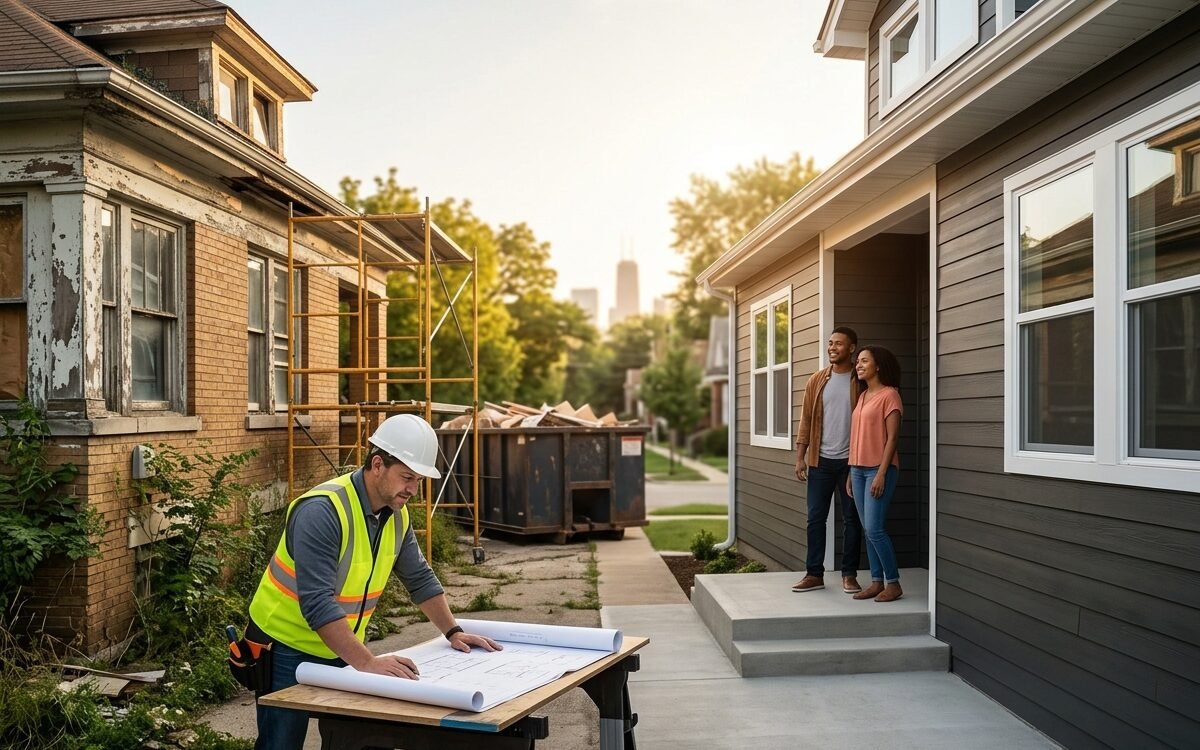
You found that fixer-upper in Chicago. The bones are good, but it needs work a lot of work. A traditional mortgage won’t cut it because the house doesn’t meet lending standards yet. That’s where an FHA 203k loan comes in. It lets you buy a distressed home and finance the renovations as part of a single mortgage. Sounds perfect, right? It can be. But there are real pitfalls you need to understand before you jump in.
This guide breaks down FHA 203k loans for distressed properties in Chicago. We’ll cover how they work, what you really pay, the common mistakes homebuyers make, and the genuine opportunities hidden in the fine print.
What Is an FHA 203k Loan?
An FHA 203k loan is a government-backed mortgage that combines purchase and renovation financing into one package. Instead of buying a distressed home with cash or a standard mortgage (which won’t work on uninhabitable properties), you can finance both the purchase price and the renovation costs together. The lender pays the seller at closing, then the construction money gets released as work completes.
The program comes in two flavors: standard 203k loans for bigger projects (over $15,000) and streamlined 203k loans for smaller renovations. Chicago has plenty of distressed homes that qualify because the market still has older neighborhoods with properties that need work.
Here’s the key difference from a regular mortgage: you’re not paying cash upfront for renovations. The lender keeps rehabilitation money in an escrow account and releases it as contractors finish milestones. This protects both you and the lender because there’s third-party oversight of the renovation.
Why FHA 203k Loans Work for Distressed Homes in Chicago
Chicago’s housing market is full of distressed properties, especially in transitional neighborhoods. Many of these homes are solid structurally but cosmetically rough. They need updated systems, new kitchens, bathroom work, or foundation repairs. A standard mortgage won’t finance them because they don’t meet current lending standards lenders won’t approve a mortgage on a house they can’t resell easily.
That’s where FHA 203k financing changes the game. You can buy a distressed Chicago home and finance repairs at the same interest rate as a standard mortgage. The home doesn’t need to be livable at closing. After renovations finish, the property should appraise higher, potentially giving you instant equity if the work’s done right.
Chicago neighborhoods like Pilsen, Logan Square, and Bridgeport have seen major appreciation over the past decade. Distressed homes in these areas can make real financial sense if you do the math correctly. You’re not speculating on an already-renovated home at peak prices. You’re buying value, adding sweat and strategy, and building a property that fits your needs.
The FHA 203k program also allows cash-out at closing if your renovation budget exceeds the purchase price plus costs. That sounds attractive, but read the fine print lenders typically won’t allow it, and if they do, it adds complications.
FHA 203k Requirements & How to Qualify
FHA 203k loans have specific qualification rules that differ from conventional mortgages. You’ll need:
Credit Score: Minimum 580 (FHA standard). Most lenders want 620+ for 203k loans because the added complexity makes them pickier. Your credit history matters more with a fixer-upper than with a turnkey home.
Debt-to-Income Ratio: FHA typically wants 43% or less. This includes your new mortgage payment, projected renovation loan, property taxes, insurance, HOA fees, and all other debts. On a distressed property project, this ratio tightens because the projected payment is higher than on a move-in-ready home at the same price.
Down Payment: FHA 203k loans require 3.5% down on the combined purchase and renovation cost. That’s lower than conventional options, which is why they’re attractive for distressed homes. But don’t forget mortgage insurance premiums (MIP)—they’ll add $150–$250+ monthly to your payment depending on loan size and credit.
Property Requirements: The home can’t be condemned or deemed uninhabitable by the city. It needs a roof, plumbing, electricity, and heating. Badly damaged properties won’t qualify. Chicago’s Department of Housing and Economic Development classifies distressed properties, and most that qualify for 203k financing fall into moderate distress—not total loss.
Contractor Selection: This is critical. You can’t just hire your cousin’s friend. Contractors need appropriate licensing and insurance. For renovation work over $7,500 in Illinois, you need a licensed contractor (IHFS #). The lender will verify this before releasing funds. This requirement protects you but also slows the process.
Timeline: FHA 203k loans take longer than regular mortgages—typically 45–60 days or more. Underwriting is stricter because the lender is essentially financing a construction project. You need architectural plans or detailed work scopes, contractor bids, and inspector approvals at multiple stages.
The Real Costs of Renovation with a 203k Loan
Most homebuyers underestimate the total cost of an FHA 203k project. Here’s what actually happens in Chicago:
Loan Origination & Fees: Expect to pay 1–2% in origination fees, plus appraisal ($500–$700), credit report, and underwriting costs. Total: $2,000–$4,000 depending on loan size. Many borrowers forget that 203k loans often come with slightly higher origination fees than conventional mortgages because lenders charge for the added complexity and oversight.
Mortgage Insurance: FHA requires mortgage insurance whether you put 3.5% or 20% down. The upfront premium is 1.75% of the loan amount (added to your mortgage). Annual premiums run 0.55–0.85% of your loan balance yearly. On a $300,000 loan, that’s $1,650 upfront plus $165–$255 monthly. This is non-negotiable with FHA 203k loans. The insurance stays for the life of the loan if you put down less than 10%, which most people do.
Architect & Inspection Costs: Most lenders require a licensed architect or engineer to inspect the property and create a detailed work scope. Cost: $800–$2,000. Some lenders hire their own inspector; you pay for it either way. In Chicago, finding an architect experienced with older homes (pre-1950 construction) matters because they understand foundation issues, outdated electrical systems, and plumbing problems common to the city’s stock.
Contingency Buffer: Your renovation estimate needs a 20% contingency. That’s not a suggestion it’s required. If your contractor estimates $50,000 in work, you’re financing $60,000 to cover surprises. You can access that money only if actual work costs more. Many experienced Chicago contractors recommend 25–30% contingency on truly distressed homes because hidden problems are almost guaranteed.
Contractor Markup & Bid Differences: Chicago contractors vary wildly in pricing. Get three bids. The difference between high and low can be 30–40%. A lower bid isn’t always better distressed homes reveal problems as work starts. You want a contractor who’s done Chicago fixer-uppers and understands old home systems. Contractors unfamiliar with FHA 203k requirements will underestimate because they don’t account for inspections and documentation delays.
Utility & Permit Costs: Chicago requires permits for most renovation work. Permits, inspections, and utility connections can add $1,500–$4,000 depending on scope. These costs are eligible for financing but need to be estimated upfront. If your distressed home needs electrical panel upgrades or plumbing system replacement, permits and inspections multiply quickly.
Lead Paint & RRP Certification: If your Chicago distressed home was built before 1978, lead paint is likely present. Federal law requires RRP (Renovation, Repair, and Painting) certification for any work disturbing paint. This adds 10–20% to labor costs because contractors need special training, equipment, and containment procedures. It’s not optional it’s federally mandated, and FHA lenders will require it.
Total Picture: On a $250,000 distressed home with $75,000 in renovations, expect total costs around $340,000–$360,000 after fees, insurance, and contingency. Your monthly payment will be higher than buying a comparable turnkey home at $325,000. That’s the price of opportunity but it’s real. A $350,000 mortgage at 7% over 30 years costs roughly $2,330 monthly (before taxes and insurance). A comparable $325,000 turnkey home would be about $2,155. That $175+ monthly difference adds up, and it’s why qualification matters.
Common Pitfalls to Avoid
Pitfall #1: Underestimating Renovation Scope
You think the roof needs minor work. The inspector finds structural damage underneath. The “fresh paint” home actually has black mold in the basement. Chicago’s older homes hide problems. Always budget high. These hidden home inspection problems can quickly change the scope and cost of a 203k renovation. General contractors often find additional work once they start, especially in 1920s 1970s homes common in distressed Chicago neighborhoods. Your contingency buffer helps, but it runs out fast.
In Pilsen or Logan Square, a distressed two-flat you’re buying for $220,000 might look like it just needs cosmetic updates. Then work starts. The foundation has cracks that need repointing. The electrical panel is 60-amp (it should be 200-amp). The plumbing is original cast iron, partially corroded. What you thought was a $40,000 project becomes $65,000 real quick. That’s why inspections matter before you sign, and contingency matters during construction.
Pitfall #2: Choosing the Wrong Contractor
The cheapest bid isn’t the best bid. Contractors who’ve never done FHA work will complain constantly about inspections and documentation. You need someone experienced with 203k loans in Chicago specifically. Poor contractor performance delays your project, burns your contingency, and frustrates everyone. Interview contractors who’ve completed FHA 203k projects. Ask for references from actual homebuyers, not just developers.
A contractor who’s done 10 conventional renovations but never an FHA 203k doesn’t understand the process. The lender requires draws (payments) only after inspections verify completed work. A contractor used to getting paid upfront will resent this. They’ll slow-walk projects, dispute inspector findings, or try to get paid for incomplete work. These aren’t bad contractors—they’re just wrong for your situation. It costs time and money to educate them on FHA rules while your project sits idle.
Pitfall #3: Financing More Than Your Home Will Appraise
This is serious. You buy a distressed home for $200,000, finance $100,000 in renovations, and end up owing $320,000 (with fees). After work, the home appraises for $305,000. You’re underwater immediately. Chicago’s neighborhoods vary dramatically in appreciation potential. A home in a strengthening area might appreciate quickly. In a flat market, it won’t. Know your neighborhood’s trajectory before you buy.
Pitfall #4: Not Accounting for the Time Factor
FHA 203k projects typically take 4–8 months from closing to completion. You’re making two mortgage payments if you need housing elsewhere. The construction timeline affects your finances. If you’re financing renovations for a rental property in Chicago, factor in lost rental income during construction. If you’re living there, plan for the disruption and cost of temporary housing.
Pitfall #5: Ignoring Property Condition Beyond Cosmetics
Cosmetic issues are cheap. Structural problems are expensive. A sagging foundation, outdated electrical systems, failing plumbing, or roof problems will drain your contingency fast. Get a thorough professional inspection before making an offer. Don’t rely on the appraisal—it’s not a detailed home inspection. A home inspection checklist for buyers can also help you review major systems and identify areas that deserve closer attention before finalizing your renovation budget.
In Chicago, older neighborhoods need particular attention to water intrusion, foundation settling, and lead paint (which requires specific RRP-certified contractors, adding 10–20% to labor costs).
Pitfall #6: Miscalculating Debt-to-Income Impact
Your new mortgage is higher than a comparable turnkey home’s would be. This affects your debt-to-income ratio. If you’re close to 43% already, the project might not qualify. A lender might approve you for a standard mortgage but decline a 203k because the added risk and higher payment push you over the limit. Check qualification numbers before you fall in love with the property.
Opportunities You Might Be Missing
Capturing Sweat Equity Quickly
If you time it right, you buy at distressed prices and finish renovations while the Chicago real estate market’s moving up. A home purchased in 2024 that closes renovations in 2025 could appreciate 3–5% just from market momentum, plus whatever value your work added. That’s equity you didn’t have to earn through mortgage payments alone. It’s real if the market cooperates.
Market timing matters here. Chicago neighborhoods move at different paces. Pilsen and Logan Square appreciated steadily from 2015–2024. Bridgeport is earlier in its appreciation cycle but showing momentum. If you buy into an appreciating neighborhood’s early phase, your renovation timeline overlaps with market gains. You’re not timing perfectly—that’s impossible—but you’re buying the momentum.
Choosing Exactly What You Want
You’re not buying someone else’s renovation taste. You’re building the property to your standards. Like an open kitchen? You build it. Want period details preserved? Do that instead. In competitive Chicago neighborhoods, this customization has real value because you’re not overpaying for upgrades you’d have removed.
A distressed 1920s Chicago home might come with original woodwork in every room. A developer would rip it out for modern tastes. You can preserve it, making the home distinctive. That distinction genuine character instead of cookie-cutter upgrades appeals to buyers in neighborhoods where authenticity matters. You’re building a property that’s hard to replicate, which translates to stronger resale value.
Below-Market Acquisition Price
Distressed homes sell 10–20% below comparable renovated homes in the same neighborhood. That discount is real money if you execute the renovation efficiently. You’re buying the discount, not paying premium prices for a finished product. If you overpay for the distressed home or blow out your renovation budget, the discount evaporates. But done right, you capture it.
Here’s a real scenario: A 2,000-square-foot home in Humboldt Park in move-in condition might sell for $420,000. The same home in distressed condition with $80,000 in needed work might be available for $340,000. If you finance $340,000 purchase plus $80,000 renovation (plus $30,000 in costs and contingency), you’re all-in at $450,000. But after completion, if comps are selling at $420,000+, your acquisition discount protected you you’ve built equity from day one through smart execution.
Building in Appreciation Markets
Chicago neighborhoods like Pilsen, Logan Square, Humboldt Park, and Bridgeport have consistently appreciated. If you buy a distressed home in an appreciating neighborhood and do smart renovations, you’re riding a dual trend—neighborhood appreciation plus value-add from your work. Buying in flat or declining neighborhoods defeats this strategy.
The neighborhoods matter more than the individual property. A beautifully renovated home in a declining neighborhood appreciates slowly. A well-executed renovation in an appreciating neighborhood rides market momentum. Focus your 203k strategy on the strongest neighborhoods with active young populations, new businesses, and rising rents. Chicago’s real estate data shows clear winners and losers. Pick accordingly.
Rental Property Investment
FHA 203k loans for investment properties are harder to get but possible. If you finance a distressed rental in a strong Chicago neighborhood, you can stabilize the property, raise rents, and build a cash-flowing asset. The higher financing costs and lender caution make this tougher than buying your primary residence, but it’s an option many investors miss.
Rental properties with 203k financing require owner-occupancy for at least one year at some lenders, or investment property status with higher down payments and rates. A $300,000 rental property financed with 203k might require 15% down instead of 3.5%, making the hurdle higher. But if you’re willing to live in one unit of a multi-unit building while renting the others, FHA rules allow it. You’re building a rental portfolio with limited capital while controlling quality through renovation.
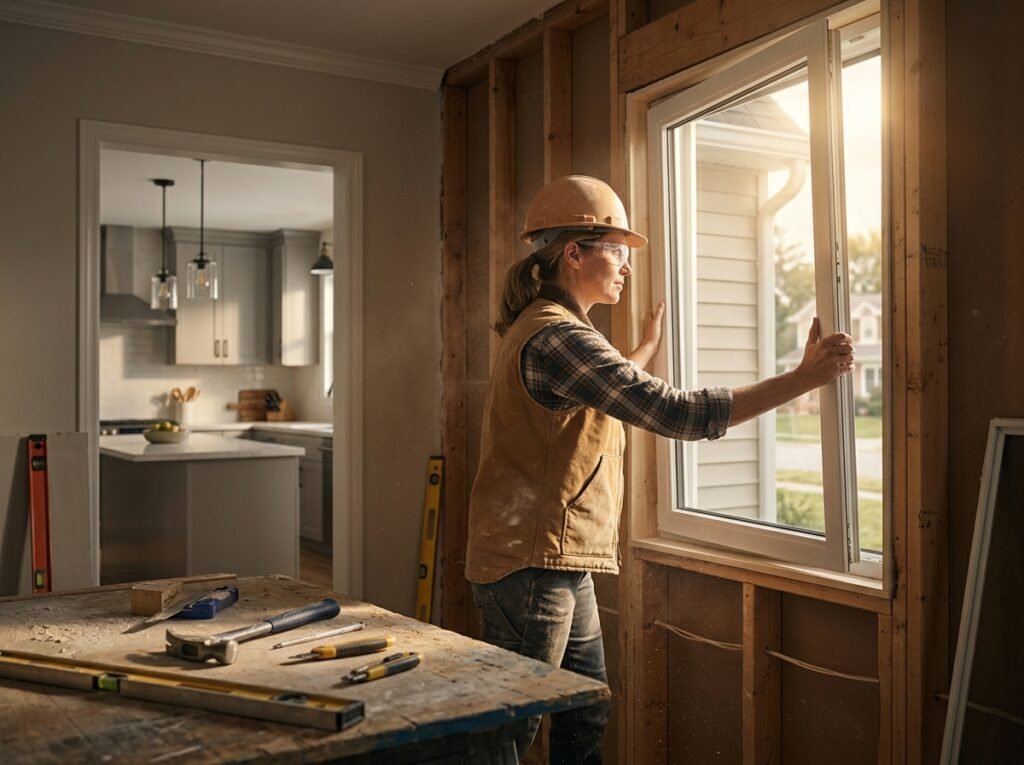
The 203k Loan Timeline: What to Expect
Understanding the timeline helps you plan financially and mentally. A typical FHA 203k project in Chicago follows this arc:
Pre-Approval to Closing (30–45 days): You’ll need pre-approval before making an offer, just like a conventional buyer. But 203k pre-approval takes longer because lenders verify your income, credit, and debt-to-income ratio more thoroughly. They’re essentially pre-qualifying you for a construction loan, not just a mortgage. Get this done early.
Property Under Contract (1–2 weeks): After an accepted offer, inspections begin. You need a thorough home inspection (not just the appraisal). The lender orders an appraisal. This is your critical research phase—you’re verifying the property’s condition and estimating true renovation scope. A professional FHA 203k inspection in Chicago can provide a closer look at the property’s condition before renovation work begins.
Architect & Work Scope (2–3 weeks): The lender hires (or you hire and they approve) an architect to inspect the property and create detailed plans. This document becomes your renovation roadmap and the contractor’s blueprint. An FHA 203k consultancy and inspection can also help buyers understand the inspection and renovation requirements associated with these projects. It’s detailed and formal, not a casual estimate.
Contractor Bidding (2–3 weeks): You (or the lender) solicit bids from qualified contractors. FHA requires competitive bids. The contractor must be licensed, insured, and have lender approval. This process is more formal than typical renovation bidding.
Final Underwriting & Approval (2–3 weeks): The lender reviews everything—your financials, the contractor’s bids, the architect’s plans, the property condition report. They’re underwriting a construction project, so it’s detailed. Expect questions and requests for additional documentation.
Closing (5–7 days after final approval): You close on the mortgage. The purchase funds go to the seller. The renovation funds go into an escrow account controlled by the lender. You don’t touch renovation money directly—the lender releases it as work completes.
Construction (4–8 months): Renovation work happens. The contractor requests draws (payment requests) as phases complete. A third-party inspector verifies the work, and the lender releases funds. This process repeats for every draw request.
Final Walk-Through & Closeout (1–2 weeks): After construction completes, a final inspection confirms all work is done to standard. The lender releases any remaining funds. You officially own a renovated home.
Total Timeline: From first conversation to move-in is typically 6–12 months for most borrowers. It’s longer than buying a turnkey home, but it’s predictable if you work with experienced lenders and contractors.
Is an FHA 203k Loan Right for You?
An FHA 203k loan makes sense if you:
- Have decent credit (580+) and stable income with clear employment history
- Can absorb delays and expect 4–8 months for completion without stress
- Found a distressed property in an appreciating Chicago neighborhood with realistic numbers
- Are willing to work with contractors and lenders on a more complex process without cutting corners
- Can handle the higher debt-to-income impact of a construction loan (43% max including the 203k payment)
- Understand that the total cost (purchase + renovation + fees) will be higher than buying a turnkey home at similar price
- Have 3.5–5% for down payment plus 2–3% for closing costs saved and accessible
- Are buying for personal use or long-term ownership (not quick flips)
An FHA 203k loan probably isn’t right if you:
- Need to buy quickly (it takes 45–60+ days minimum)
- Want the absolute lowest monthly payment (the mortgage insurance and added costs make it higher)
- Don’t have room in your budget for contingencies or cost overruns (things go wrong in old houses)
- Are buying in a flat or declining Chicago neighborhood with no appreciation momentum
- Can’t qualify because your debt-to-income ratio is already tight or close to 43%
- Prefer the simplicity of a standard mortgage without construction oversight
- Have unstable income or irregular employment (lenders scrutinize this more on 203k loans)
- Are uncomfortable having contractor disagreements or managing a renovation project
- Found a property that seems too good a deal distressed prices exist for reasons
Real Scenarios:
Scenario 1: You’re a teacher with $45,000 stable income and $25,000 saved. You found a distressed two-bedroom in Pilsen for $220,000 needing $60,000 work. Your total financing is ~$290,000. Your debt-to-income with the new mortgage, taxes, insurance, and other debts is probably 38–40%. You qualify. The neighborhood’s appreciating. You have time. This works.
Scenario 2: You’re freelance with variable income, credit score 595, and $15,000 saved. You want to buy a fixer in Bridgeport for $280,000. Variable income makes lenders nervous on 203k loans—they want predictability. Your credit is borderline. Your down payment and closing costs leave little buffer. Your debt-to-income is already 42%. This is risky. A standard mortgage on a turnkey home might be easier.
Scenario 3: You’re a couple, both salaried, combined $140,000 income, credit 680+, $80,000 saved. You found a distressed three-flat in Logan Square for $380,000 with $100,000 needed work. Your total financing is ~$495,000. Debt-to-income around 38%. The neighborhood’s strong. You have cushion for cost overruns. You can qualify for the full amount comfortably. This is ideal for 203k financing.
The real story of FHA 203k loans isn’t that they’re universally good or bad. It’s that they’re powerful tools for specific situations. If you’re disciplined, patient, and strategic, they unlock opportunities in Chicago’s distressed housing market that conventional financing can’t touch. If you’re optimistic and underprepared, they’ll frustrate you and cost more than you expected. Working with Sabreez Home Inspection can help you better understand the property’s condition before committing to a major renovation.
FAQ
What’s the difference between a standard FHA 203k loan and a streamlined 203k loan?
Standard 203k loans apply to projects over $15,000 and require more thorough documentation, architect involvement, and multiple inspections. Streamlined 203k loans apply to smaller projects (under $15,000) and have simpler requirements—faster approval but limited to minor renovations. Chicago distressed homes typically need standard 203k loans because most projects exceed $15,000 when you account for hidden issues and necessary repairs.
Can I use an FHA 203k loan to buy a primary residence or investment property?
Yes to both. FHA 203k loans work for owner-occupied primary residences and investment properties, though investment properties face stricter lender requirements and higher interest rates. Most 203k loans go to primary residences. If you’re buying an investment property distressed home in Chicago, prepare for tighter underwriting and potentially longer approval timelines. Lenders view investment property projects as higher risk.
How much of my renovation budget actually goes to labor versus materials?
In Chicago, renovation labor typically runs 50–60% of total costs for comprehensive rehabs; materials are 40–50%. For cosmetic-only work, labor might be 40%. Structural work (foundation, electrical, plumbing) skews toward labor. Always get itemized bids from contractors that break out labor and materials separately. This helps you understand where money goes and spot red flags if one contractor’s bid is suspiciously low.
What happens if my renovation costs exceed my contingency buffer?
If actual renovation costs exceed your contracted budget plus contingency, you have limited options. You can request additional funds from the lender (rarely approved), pay out of pocket, or stop work and accept an incomplete renovation. This is why a realistic contingency matters. Most lenders require 20% contingency, but experienced developers use 25–30% for truly distressed Chicago homes. Underestimating here is expensive.
Can I get an FHA 203k loan if I have a lower credit score?
FHA loans officially require 580+ credit scores, and 203k loans specifically usually demand 620+ due to added complexity. If your score is 580–619, you’ll face higher interest rates and stricter documentation requirements. Some lenders won’t do 203k loans for scores below 620. If you’re borderline, it’s worth shopping multiple lenders because guidelines vary. A co-signer with better credit might help, though it adds complications.
How does the appraisal work on a distressed home versus a completed renovation?
The lender orders an appraisal on the as-is condition initially to estimate post-renovation value. They’re essentially betting that after your work, the home will appraise high enough to secure the loan. A final appraisal happens after renovations complete. If the final appraisal comes in lower than expected, you’re responsible for the difference you can’t walk away. This is why neighborhood research and realistic contractor estimates matter so much.
Ready to explore distressed homes in Chicago?
Understanding FHA 203k loans is the first step. Talk to a lender experienced with 203k financing before you make an offer. Get a detailed home inspection. Choose a contractor who’s done this before. And run the numbers conservatively. If you’re considering a distressed property, contact our inspection team to discuss your inspection needs before moving ahead. Done right, an FHA 203k loan opens doors to Chicago’s best real estate opportunities.