

Four-Point Inspection in Chicago: Complete Guide for Homeowners & Insurance
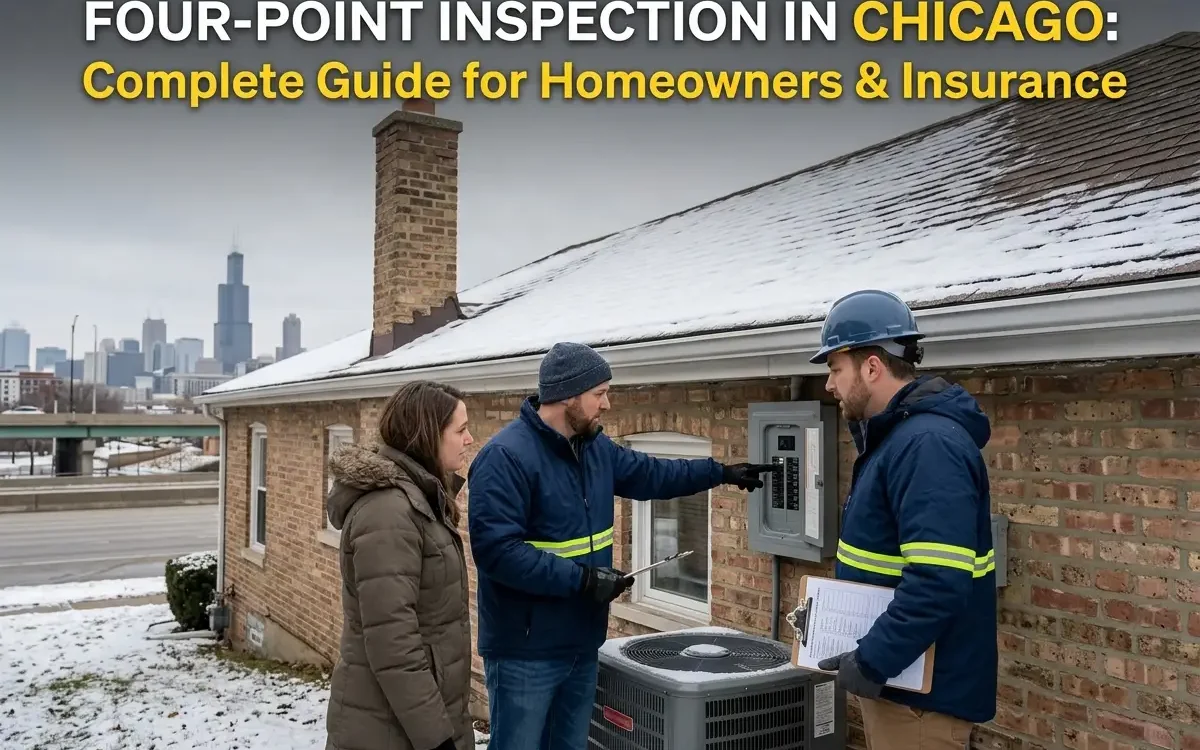
If your insurance company has asked you for a four-point inspection, you probably have a few questions. What exactly gets checked? Does your house need to pass anything? And why is this suddenly part of getting or keeping homeowners insurance?
A four-point inspection is a focused look at four major systems in a home: the roof, the electrical system, the plumbing, and the heating and cooling equipment. Insurance companies use it to understand the risk they are taking on when they write a policy, especially for a property that has been standing for a few decades. It is not a full home inspection, and it is not meant to catalog every issue in a house. It exists for one purpose: to give an insurance company a current picture of the four systems that tend to cause the most expensive claims.
After years of four-point inspections in Chicago homes, one thing becomes clear: most homeowners are not confused about what the inspection covers. The bigger questions usually come afterward. What will happen if something is found? Does the home actually “pass”? And how is the report used once it reaches the insurance company? This guide explains all parts in detail, so homeowners know what to expect before and after a four-point inspection.
What Does a Four-Point Inspection Check?
A four-point inspection looks at four major areas that can affect a home’s condition and insurance risk. The sections below explain what inspectors examine in each area.
Roof
The inspector looks at the roof surface and material, whether it’s an asphalt shingle, tile, or something else, and tries to estimate its age based on wear and any documentation available. They’ll note damage such as cracking or granule loss, along with missing or damaged shingles and tiles.
Signs of past or active leaks matter here too, along with the condition of flashing around chimneys and roof penetrations, since that’s a common spot for water intrusion. The inspector documents the general quality of the roof as seen on the day of the visit.
It’s worth being direct about a limitation here: no inspector can tell you with full confidence how many years a roof has left. What they can do is document its visible condition and flag anything that suggests it’s near the end of its useful life. That’s a meaningful difference between an honest assessment and a guarantee, and a good inspector will be upfront about which one they’re giving you.
Electrical
The inspector evaluates the electrical system, including the main panel, the system’s overall condition, and any visible, accessible wiring. In many older Chicago homes, the inspection may identify issues such as double-tapped breakers, exposed connections, knob-and-tube wiring, or aluminum branch-circuit wiring. These conditions can raise concerns for some insurance companies, depending on their underwriting requirements. Grounding and bonding are evaluated where they are visible and accessible. The inspector also checks whether the electrical panel is accessible or obstructed. Older electrical systems are common in Chicago because many homes predate current electrical standards. However, an older system does not automatically mean a home is unsafe. The insurance decision depends on the individual carrier and its underwriting requirements.
Plumbing
The plumbing portion of the inspection covers visible supply piping and, when accessible, drain piping, with the materials noted when they can be identified. Some insurance companies may have concerns about older plumbing materials, such as galvanized steel supply lines or polybutylene piping. The inspector looks for visible leaks and signs of water damage and evaluates the condition and age of the water heater. Shutoff valves and other accessible plumbing components are also examined. Keep in mind that a four-point inspection is primarily visual and limited to components that can be seen and reached. It does not involve opening walls, digging trenches, or other invasive work, so the report reflects the visible and accessible conditions found at the time of inspection.
Heating and Cooling
The HVAC portion covers the furnace or primary heating equipment and, where applicable, the air conditioning system. The inspector notes the age of the equipment and its visible condition and, in many cases, will verify basic operation, such as confirming the system turns on and responds normally to the thermostat.
Venting and flue components get checked where they’re visible, along with the fuel type the system uses. Any obvious leakage, damage, or safety concern gets documented. This isn’t the same as a full HVAC service call or an engineering evaluation of the system’s efficiency. It’s a condition check aimed at giving the insurer a general sense of the equipment’s age and functionality.
Why Do Insurance Companies Request a Four-Point Inspection?
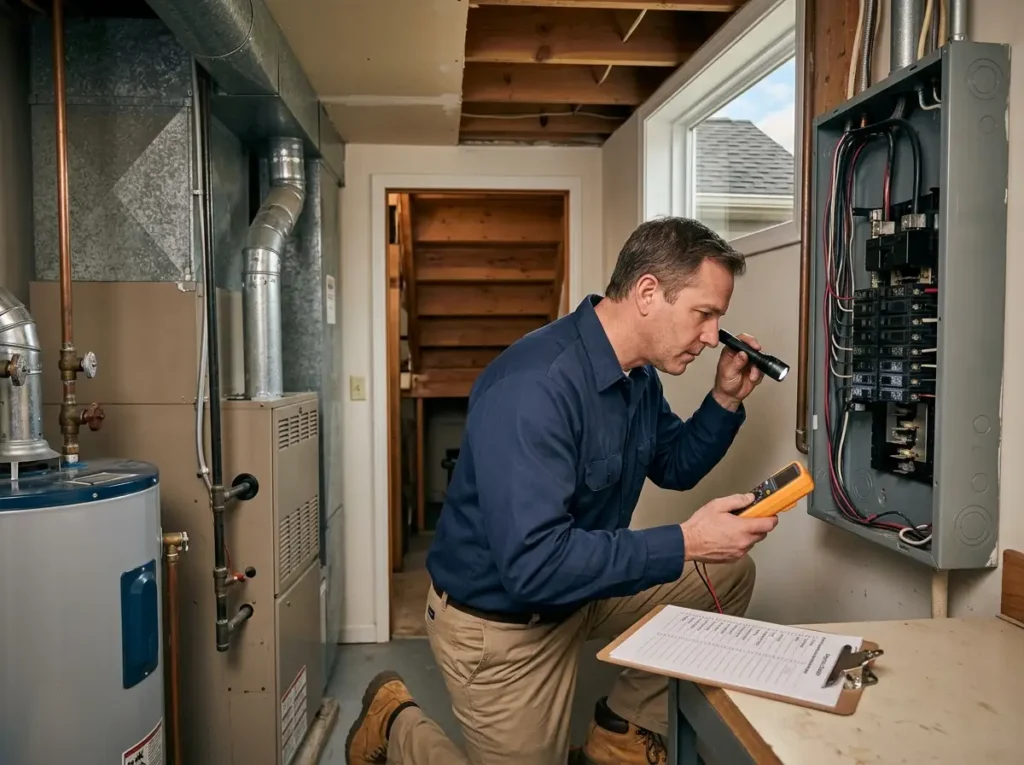
Insurance companies use a home’s major systems to assess risk. An older roof can mean a higher chance of wind or water damage. Outdated wiring can increase fire risk, while aging plumbing and heating systems can lead to expensive claims.
A four-point inspection gives the underwriter a clearer view than the home’s age alone. It documents the true condition of the roof, electrical, plumbing, and HVAC systems at the time of inspection. Insurers may request one when issuing a new policy, renewing coverage on an older home, or switching carriers.
The inspector documents what is visible. The insurance company then decides how those findings impact coverage and pricing. Keeping those roles separate ensures that homeowners understand what the inspection can and cannot determine.
Do All Chicago Homes Need a Four-Point Inspection?
No, not automatically. Whether a four-point inspection is required depends largely on the insurance company and its underwriting guidelines. Some insurers may require one for older homes, while others may require an inspection based on their own policy requirements or may not require one at all. If an insurer has told you that a four-point inspection is needed, the requirement comes from the carrier. The insurer or agent can also explain what documents or report format they will accept. Check with the insurance agent before scheduling the inspection to confirm that one is required and to understand any specific requirements.
Why Chicago Homes May Need Special Attention
Chicago homes have a large stock of older homes, including bungalows, two-flats, and three-flats built before modern building codes. That age makes older wiring, plumbing, and aging roofs common concerns during four-point inspections.
Chicago winters add another concern. Heavy use can expose problems with older heating systems, while freeze-thaw cycles can affect roofs, flashing, and aging plumbing. Older pipes can be especially exposed during severe freezes.
Chicago does not have separate insurance rules for four-point inspections. The combination of older homes and harsh weather simply makes these systems more important when insurers assess property risk.
What Can Cause Concerns During a Four-Point Inspection?
Roof concerns can involve an aging covering, leak damage, or a flat roof that carries higher insurance risk. Electrical issues typically include active knob-and-tube wiring, aluminum branch circuits, outdated panels, or exposed wiring. Plumbing concerns involve galvanized steel or polybutylene pipes or an aging water heater. HVAC findings include older equipment, damage, or venting problems.
These findings don’t mean the homeowner has failed an inspection. They simply document the condition seen at the property. An inspector’s recommendation, an insurance requirement, a repair item, and a condition needing further evaluation are not the same thing. Each can carry different implications for the homeowner and insurer.
Is There a Pass or Fail for a Four-Point Inspection?
This is probably the most misunderstood part of the whole process. A four-point inspection is not a pass or fail test in the way many homeowners assume. The inspector’s role is to document the condition of the major systems, not to approve or deny insurance coverage. That decision is made by the insurance company.
Two different insurers can review the same report and reach different conclusions because underwriting standards vary from one carrier to another. One company may require a repair before issuing coverage. Another may offer coverage with a higher premium. A third may not have an issue with the finding at all. An inspector cannot guarantee insurance approval based on the inspection because that decision is outside the inspector’s role.
What Should You Do Before the Inspector Arrives?
The inspection can run smoothly if a little preparation is done beforehand. Make sure there is clear and unobstructed access to the electrical panel, furnace or boiler, and air-handling equipment. Remove obstructions from accessible plumbing areas, such as under sinks and in utility rooms. Collect records of furnace, water heater, plumbing, roofing, and electrical work to help verify system ages and recent work.
Contact the insurance provider ahead of time to find out what they require, since some insurance companies have specific requirements. On inspection day, make sure the property and any locked areas the inspector will need to enter are easily accessible.
How Much Does a Four-Point Inspection Cost in Chicago?
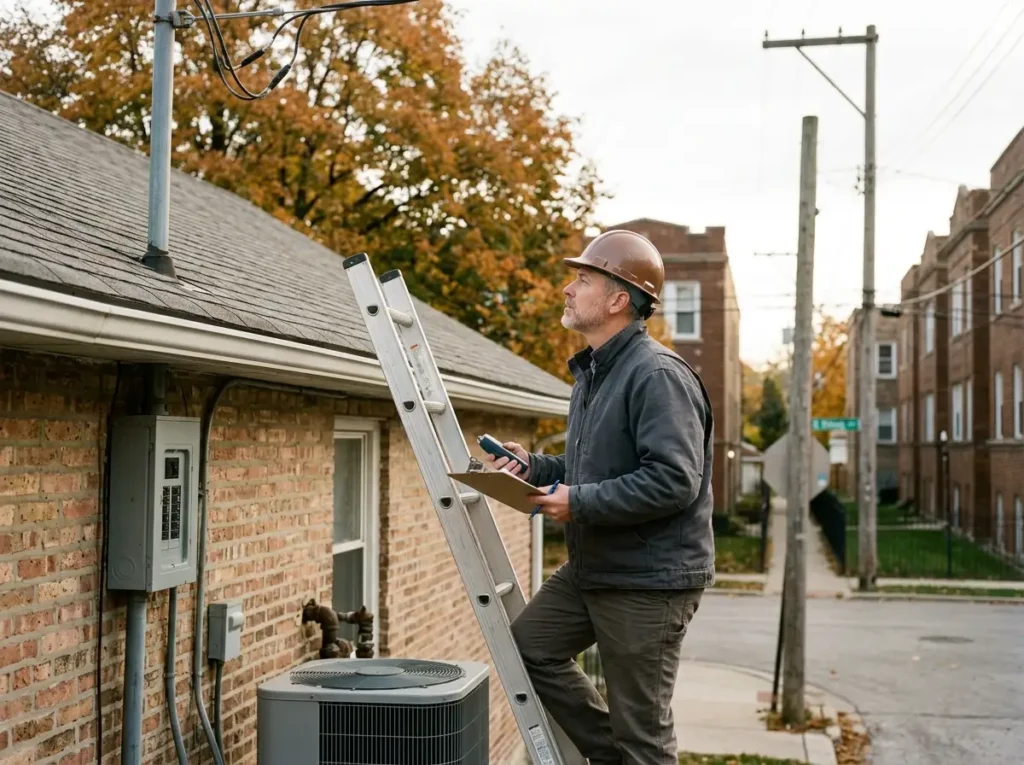
A four-point inspection in Chicago typically costs between $250 and $450. This is a current general price range, but the final cost can vary depending on the home’s size, age, accessibility, and the scope of the inspection. The insurer’s specific requirements can also affect the price if additional documentation or inspection details are needed.
Pricing can change from one property to another because older or harder-to-access homes may take more time to inspect. The best way to confirm the current cost is to ask the inspector for a quote based on your specific property and the report your insurance company requires.
How Long Does a Four-Point Inspection Take?
There is no single answer that fits every home. A smaller home with easy access to the electrical panel, plumbing components, and heating equipment may take less time to inspect than a larger home or one with difficult access. The home’s layout and the accessibility of its major systems can also affect the length of the inspection. Existing records can help provide information about system ages, although they do not determine how long the site visit will take. If an insurance deadline is approaching, it can help to ask the inspector for an estimated inspection time before scheduling.
What If Problems Are Found?
If the inspector documents a concern, the first step is simply understanding what was actually found and why it matters. Not every noted item requires immediate action. Some findings are worth monitoring, while others point to something that should be addressed by a licensed roofer, electrician, plumber, or HVAC technician.
If repair work is needed, get the right professional involved for that specific trade rather than trying to interpret the finding yourself. Keep documentation of whatever work gets done, since your insurer may ask for updated information or request a reinspection to confirm the issue has been resolved before finalizing or continuing coverage.
Four-Point Inspection vs Full Home Inspection
These two get confused constantly, but they serve different purposes and cover very different ground.
| Category | Four-Point Inspection | Full Home Inspection |
| Purpose | Insurance underwriting | General property condition, usually for a buyer |
| Roof | Checked | Checked |
| Electrical | Checked | Checked |
| Plumbing | Checked | Checked |
| HVAC | Checked | Checked |
| Structure and foundation | Not covered | Checked |
| Interior components | Not covered | Checked |
| Exterior (siding, windows, doors) | Not covered | Checked |
| Attic | Generally not covered | Checked |
| Basement | Generally not covered | Checked |
| Appliances | Not covered | Often checked |
| Typical reason for ordering | Insurance requirement | Real estate purchase, seller disclosure, general due diligence |
If you’re buying a home, a four-point inspection is not a substitute for a full home inspection. It’s a narrower report built specifically for insurance purposes, and it won’t tell you about foundation cracks, attic ventilation, or the condition of your kitchen appliances the way a full inspection would.
Four-Point Inspection vs Other Insurance Inspections
A four-point inspection can sometimes be confused with other insurance-related inspections, such as a wind mitigation inspection. The two serve different purposes. A wind mitigation inspection evaluates features of a home that may help reduce wind damage, including roof shape, roof-to-wall connections, and protection of openings. This type of inspection is more commonly relevant in areas with significant hurricane and wind exposure. It is less commonly relevant to the average Chicago homeowner, but it is important to understand that a wind mitigation inspection and a four-point inspection are not the same.
Questions to Ask Before Scheduling
- Does my insurance company actually require this inspection, or are they asking for something else?
- What specific report or form does my insurer expect to receive?
- Which areas of my home need to be accessible for the inspection?
- What information or documentation should I have ready ahead of time?
- What does the inspection cost for a home my size?
- When will I receive the completed report?
- What happens if the inspector documents a concern with one of the four systems?
- Is a recheck available if repairs are made afterward?
- Does the inspector regularly work in my specific part of Chicago?
- Is the inspector licensed and, if applicable, affiliated with a recognized inspection association?
FAQs
What is the actual purpose of a four-point inspection?
It gives an insurance company documented information about the condition of a home’s roof, electrical, plumbing, and HVAC systems so they can make an informed decision.
How old does a home have to be before this inspection comes up?
There’s no single citywide age requirement. It depends entirely on the insurance carrier and their specific guidelines, which vary from one company to another.
Does passing this inspection guarantee my insurance will be approved?
No. The inspector documents conditions, but the insurance company decides how that information affects coverage, pricing, or any required repairs. That decision is never made by the inspector.
What happens if the inspector finds a problem with my roof or wiring?
It gets documented in the report. From there, you may need to get a licensed contractor involved, and your insurer will decide what, if anything, they require before issuing or continuing coverage.
Is this the same thing as a full home inspection?
No. A four-point inspection only covers four specific systems for insurance purposes, while a full home inspection evaluates the entire property and is typically used during a real estate deal.
Scheduling a Four-Point Inspection in Chicago
We perform four-point inspections throughout Chicago and the surrounding Illinois suburbs when an insurance company requires one. Our inspections cover the roof, electrical, plumbing, and HVAC systems that need to be documented for the insurance process.
Sabreezz Home Inspection has over 15 years of field experience and operates as an InterNACHI Associate. To check current pricing or schedule a four-point inspection, call us directly at (773) 312-2511 or schedule an appointment online