

Four-Point Inspection Cost in Chicago, IL: 2026 Pricing Guide
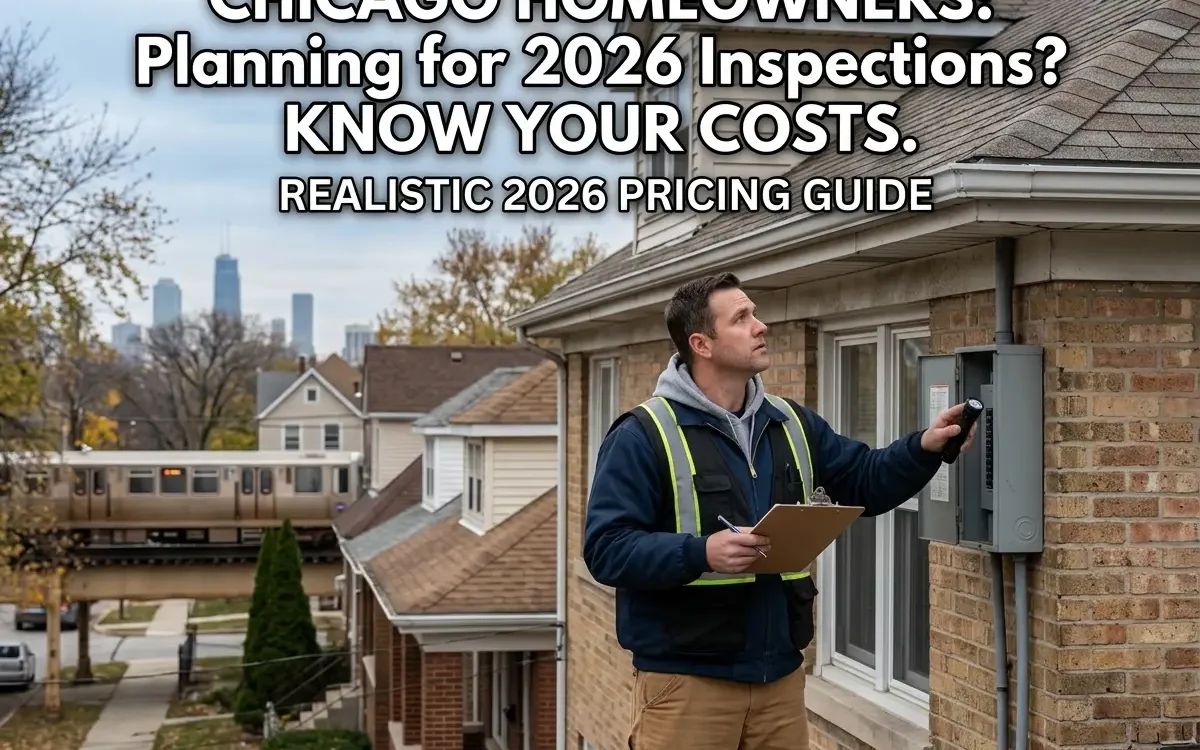
Four-point inspection costs in Chicago usually fall somewhere between $100 and $200, based on what local inspection companies are currently charging homeowners. That number moves around depending on the property itself, and by the end of this guide you’ll know exactly why.
This isn’t a made-up figure pulled from a national average. It reflects what’s actually happening in this specific market right now, in 2026. If you’re staring down an insurance deadline and just need a real number to work with, that’s your starting point. The rest of this guide breaks down what pushes that price higher or lower for your particular home.
The Current Cost of Four-Point Inspections in Chicago
Pricing for this type of inspection has increased over the years, and there’s a simple reason for it. Illinois labor costs, especially in a metro as large as Chicago, run higher than in a lot of the country. The same pattern applies to full home inspections here, which typically land well above the national average too.
So when someone asks how much a four-point inspection costs, the honest answer depends on where you’re asking from. A homeowner in a smaller Midwest town might pay closer to the $75 to $125 range you’ll see quoted on national sites. That number simply doesn’t hold up once you’re inside Chicago or the surrounding suburbs. Four-point inspection prices in Illinois tend to sit meaningfully above those national figures, and for larger or more complex properties, you can expect to land closer to $200.
None of this means every inspector charges the same rate or that any single company’s price applies to your home specifically. Rates shift based on the inspector’s overhead, how busy they are that season, and a handful of property-specific details we’ll get into next.
Factors That Affect Four-Point Inspection Costs
Price isn’t random. A few specific things determine what you’ll actually pay, and once you understand them, a quote stops feeling like a mystery. Home square footage is usually the first thing an inspector asks about, and for good reason. A 900-square-foot bungalow takes a lot less time to walk through than a sprawling 3,200-square-foot single-family home. More square footage generally means more time on site, and time is what you’re paying for.
Age matters just as much, though not in the way most people assume. It’s not that older homes automatically cost more. It’s that older systems often take longer to document properly. A 1920s two-flat with an original panel and decades of plumbing modifications requires more careful notes than a house built in 2005 with everything still under warranty.
The inspector’s own experience and licensing level play into this too. Someone who’s been doing this work for fifteen years and carries solid credentials tends to charge a bit more than someone just starting out. That’s not a knock on newer inspectors; it’s just how licensed inspector rates tend to shake out across any service industry. Where the property sits within the metro affects things as well.
An inspector based on the North Side driving out to a far western suburb in DuPage County is going to factor that drive time into the quote somewhere. Staying within Cook County, closer to where most inspectors are already working, often keeps travel costs down. And if a home has a documented history of flagged systems from a previous inspection, that can add time too. The inspector isn’t just glancing at the roof; they’re comparing the current condition against whatever was noted before.
Cost Differences by Property Type
Not every property type gets treated the same when it comes to pricing, and this trips up a lot of first-time homeowners.
Single-family homes make up the bulk of what most inspectors see day-to-day, and pricing for these tends to sit right in the middle of the range we already covered. Condos and co-ops usually come in lower, simply because the inspection scope shrinks. You’re only responsible for what’s inside your unit, not the roof or the building’s shared electrical infrastructure, so there’s less ground to cover.
Two flats and three flats are a different story. These properties often have separate HVAC units, separate electrical panels, and sometimes duplicated plumbing runs for each unit. More systems mean more documentation, and that generally pushes the price toward the higher end of what you’d expect for a single-family home of similar size, sometimes past it.
If you own a multi-unit building, it’s worth asking your inspector directly how they structure pricing for that property type before you assume it’ll match a standard quote.
Extra Fees That Can Add to the Base Price
The number you’re quoted upfront isn’t always the final number, and it helps to know where the gaps usually show up. Re-inspection fees are the most common one. If your insurer flags an issue and requires proof that it’s been fixed, most inspectors charge separately to come back out and verify the repair.
This isn’t universal; some companies build one free re-inspection into their base fee, but plenty don’t, so it’s worth asking before you book. Report delivery speed can also affect cost. Standard turnaround time is usually a day or two, but if you need something the same day because your insurance deadline is tomorrow, some inspectors charge a rush fee for that.
Travel surcharges show up occasionally too, particularly for properties well outside an inspector’s normal service radius. None of these fees are guaranteed to apply to you, but they’re common enough that asking about them upfront saves you from an unpleasant surprise on the invoice.
Can a Four-Point Inspection Actually Save You Money on Insurance?
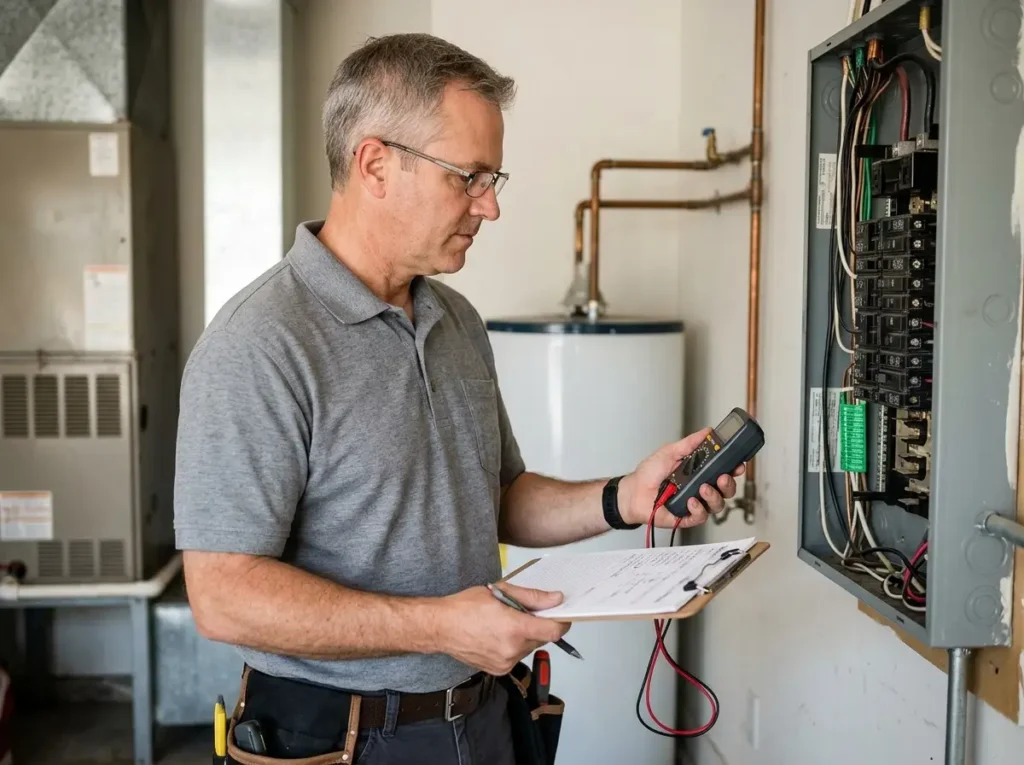
This is where I want to be straight with you, because a lot of what gets written about this topic oversells what the inspection actually does. The inspection itself doesn’t lower your rate. What it does is confirm your home doesn’t carry the kind of risk that raises it. Those are two very different things, and understanding the difference matters.
Here’s what actually happens with the savings side of it. When your roof, electrical, plumbing, and HVAC come back documented in solid condition, that report gives your insurer confidence your home isn’t a high-risk property. That confidence is what keeps you out of a surcharge or, worse, a coverage denial. In that sense, yes, the inspection protects your wallet, just not by shrinking your bill directly.
There’s also a practical angle worth knowing about if you’re shopping for a new policy. Walking into a new insurer with a clean, current report in hand gives you something concrete to negotiate with, rather than asking them to take your word for the home’s condition. And if the inspection does turn up something, like an aging water heater or a panel that needs attention, getting that fixed and documented with an updated report can prevent your premium from climbing at your next renewal.
So the real value isn’t a discount check in the mail. It’s avoiding the increases and denials that come from an insurer who has no documentation to go on.
What Raises Concerns During the Inspection (And What That Means for Cost)
If something gets flagged during your inspection, it usually adds a step, and that step usually adds a small cost. A documented issue often means a follow-up re-inspection once repairs are made, which brings that separate fee back into play. Beyond the inspection itself, you’re also looking at whatever the actual repair costs are, handled by a licensed electrician, plumber, or roofer depending on what came up. None of that is part of the inspection price, but it’s worth budgeting for if your home has any known age-related wear before you schedule.
Frequently Asked Questions
How much does a four-point inspection cost in Illinois in 2026?
Across the Chicago metro, most homeowners are paying between $100 and $200, with larger or more complex properties running closer to $200.
Is a four-point inspection cheaper than a full home inspection?
Yes, generally by a wide margin. A full home inspection in Chicago often runs $350 to $600 or more, since it covers the entire property instead of four specific systems.
Why do four-point inspections cost more in Chicago than the national average?
Regional labor costs are higher here than in a lot of the country, and you see that same pricing gap on full home inspections in this area compared to national figures.
Are there hidden fees I should ask about before booking?
Ask specifically about re-inspection charges and rush delivery fees. These aren’t hidden exactly, but they’re easy to miss if you don’t ask upfront.
Does an older or larger home cost more to inspect?
Larger homes almost always take more time, which raises the price. Older homes don’t automatically cost more, but if the systems are original or heavily modified, documenting them properly can add time to the home inspection process.
Get an Accurate Quote for Your Chicago Home
Every property is different, and the only way to get a number that actually reflects your home is to talk to an inspector directly. We handle four-point inspections across Chicago and the surrounding Illinois suburbs, and we’re happy to walk you through what your specific property will likely cost before you commit to anything. Call us at (773) 312-2511 or book online to get a real quote for your home.