

Builder Warranty Inspection for New Construction Homes in Naperville, IL
Buying a new construction home usually means moving into a property that has already passed through multiple stages of construction and finishing. Still, some problems do not become noticeable until the house has been occupied for several months. Sabreezz Home Inspection provides independent home inspection services to help homeowners document observable concerns.
A builder warranty inspection in Naperville gives homeowners an opportunity to have the property reviewed before the applicable warranty period ends. An independent inspector can document visible conditions and provide a written record of findings. The inspection itself does not decide whether a builder is responsible for a repair or whether an item is covered by the warranty. Those questions depend on the warranty documents and the builder’s procedures.
Why a New Home Still Needs a Warranty Inspection
Living in a home can reveal issues that may not have been apparent when the property was first completed. Some components are used repeatedly every day, while others are exposed to changing outdoor conditions over time. Small workmanship issues can become easier to recognize once the home has been occupied through different conditions.
For example, a homeowner might notice that an interior door rubs against its frame, a cabinet does not close correctly, or water collects near part of the exterior after rain. A small gap around a window or an unfinished section of trim may only become obvious after furniture is moved in and the house is being used normally.
A warranty inspection provides another set of eyes before the applicable claim period closes. Rather than relying only on what is noticeable during everyday routines, the homeowner receives a documented review of accessible areas and observable conditions. Homeowners planning this type of inspection can also review new construction inspection costs in Chicago when budgeting for the inspection.
When Should You Schedule an 11-Month Warranty Inspection in Illinois?
An 11-month warranty inspection in Illinois is commonly used when a home’s warranty provides approximately one year of coverage. Scheduling before the end of that period gives the homeowner time to receive the report, review the findings, and follow the builder’s procedure for reporting applicable concerns.
The timing should come from your own paperwork rather than from the phrase “11-month inspection.” Warranty programs can have different coverage periods, notice requirements, exclusions, and deadlines. Look for the actual expiration date and any separate warranty claim deadline that applies to your situation.
Leaving the inspection until the final days can make the process unnecessarily difficult. If the report identifies several concerns, you may need time to organize photographs, prepare a punch list, and submit the information through the required channel.
| Important Note: Do not assume that month 11 applies to every new construction home. Check your warranty documents for the coverage period, expiration date, applicable claim deadline, and submission procedure before scheduling a pre-expiration walkthrough. |
What Should a New Home Warranty Inspection Check?
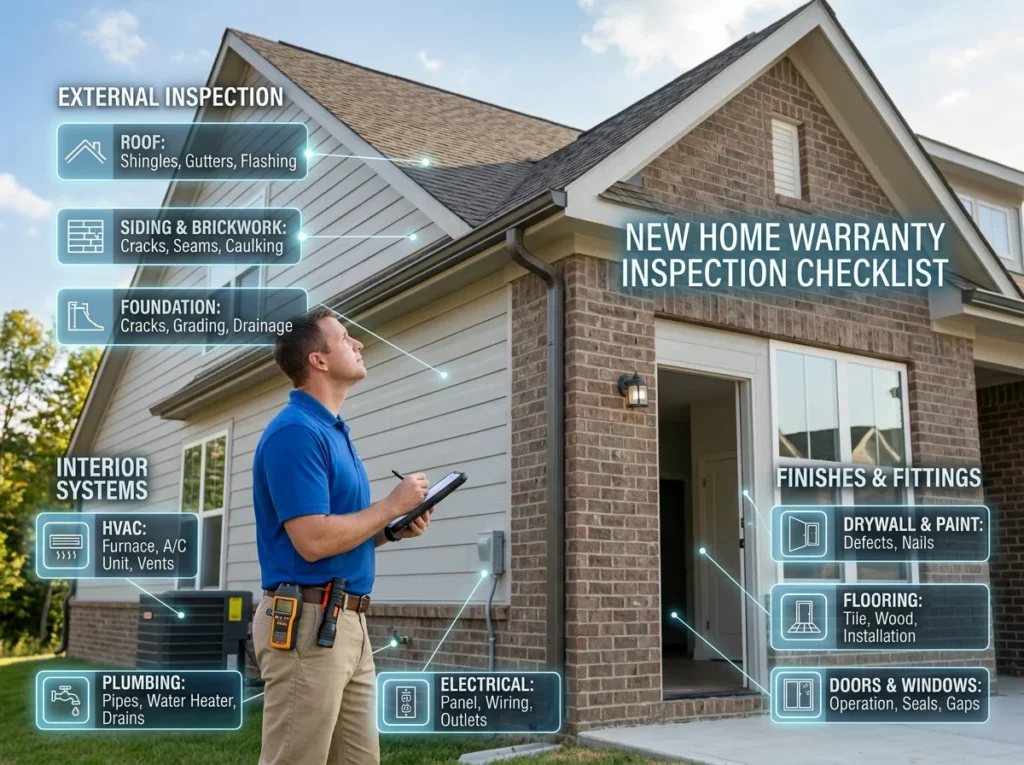
A warranty-focused home inspection should concentrate on conditions that can be observed at the time of the inspection. Common concerns can include workmanship, drainage, foundation, roofing, HVAC, and other installation issues, as discussed in this guide to new construction defects in Schaumburg and Naperville. The focus is on finding and documenting concerns that may have appeared during the homeowner’s first months of occupancy.
Exterior, Drainage, and Building Envelope
The exterior review may include accessible siding, trim, doors, windows, roof components that can be safely observed, exterior penetrations, and visible drainage conditions.
Water-related concerns deserve attention because some are easier to recognize after the property has experienced normal weather. Evidence of water entry, deteriorated materials, gaps, or areas where drainage does not appear to perform as intended can be documented for further consideration.
Interior Finishes and Workmanship
Inside the home, the inspection can identify visible conditions involving walls, ceilings, flooring, doors, windows, trim, cabinets, stairs, and other finished components.
Not every imperfection will necessarily be a warranty issue. The useful distinction is between what can be observed and what the warranty covers. An inspector can document the condition, while the homeowner can determine whether it should be submitted under the applicable terms.
Major Home Systems
Accessible portions of plumbing, electrical, heating, cooling, and other major systems may be reviewed within the inspection’s scope.
The purpose is to identify observable concerns rather than predict when equipment will fail. A fixture that does not operate properly or a visible plumbing concern, for example, may deserve documentation while the homeowner still has an opportunity to report it.
Attic, Basement, Crawlspace, or Other Accessible Areas
Some concerns are easier to notice in less frequently used parts of the home. Where these areas are safely accessible, the inspection may include visible insulation, ventilation, moisture evidence, structural components, or other observable conditions.
Accessibility matters. An inspection should not imply that concealed or inaccessible areas were evaluated when they could not actually be observed.
Which Problems Belong on Your Warranty Punch List?
An inspection report does not automatically become a list of warranty obligations. It gives the homeowner documented findings that can be reviewed against the terms of the agreement.
Potential punch list items might include a window that is difficult to operate, damaged flooring, loose or incomplete trim, visible moisture evidence, a plumbing concern, exterior drainage problems, or other conditions identified during the inspection.
The value of the list comes from being specific. Instead of writing that something “looks wrong,” record what was observed and where it was found. Photographs and report references can provide additional defect documentation.
| Pro Tip: Start your warranty punch list with documented inspection findings. Then compare those findings with the warranty terms rather than assuming every item is covered. |
How to Document Defects Before the Builder Warranty Expires
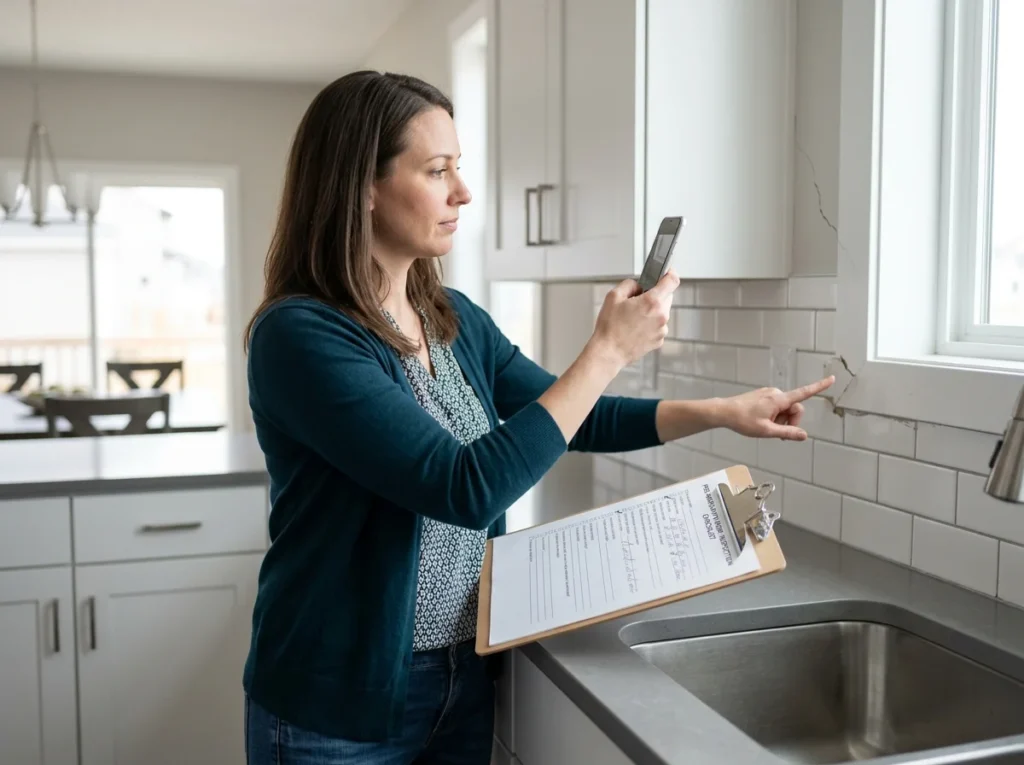
A clear record can make communication much easier when several concerns need to be discussed with a builder. Keep the inspection report with photographs that show the condition and its location. If the issue has already been reported, retain the related emails, portal submissions, work orders, or other correspondence.
Dates are useful too. Note when an issue was discovered, when it was reported, and what response was received. If a repair takes place, keep the record of the work rather than treating the matter as finished and discarding the earlier documentation.
This information does not establish warranty coverage by itself. It simply creates a clearer history of the condition and the homeowner’s communication about it.
What Happens After the Warranty Inspection?
Once the inspection is complete, review the report carefully instead of sending every observation to the builder without context. Compare relevant findings with the warranty documents and identify which concerns may warrant submission.
Next, prepare the punch list and use the builder’s required process. Some warranty programs may specify how concerns must be reported, so follow the instructions that apply to your home.
Keep track of the builder’s response time if the warranty process provides one. Save replies, appointment details, repair records, and notes about unresolved items. If the builder disputes an item or determines that it falls outside the warranty, retain that communication as part of the property’s records.
One-Year Builder Walkthrough vs. Independent Warranty Inspection
A one-year builder walkthrough and an independent warranty inspection have different roles. The builder walkthrough is part of the builder’s own process for addressing homeowner concerns. An independent inspection gives the homeowner a separate review of observable conditions.
| One-Year Builder Walkthrough | Independent Warranty Inspection |
| Part of the builder’s warranty or customer-service process | Arranged independently by the homeowner |
| Concerns are discussed directly with the builder | Conditions are documented in an independent inspection report |
| Follows the builder’s procedures | Follows the inspection’s defined scope |
| May be used to identify work the builder should review | Helps the homeowner organize observations before submitting concerns |
| Does not replace review of the warranty documents | Does not determine whether a finding is covered |
Using one process does not automatically eliminate the value of the other. The homeowner should understand what the builder provides and what additional information an independent inspection could supply. A new construction home inspection can provide another independent review of observable conditions before the warranty process is complete.
What About Structural and Workmanship Warranties?
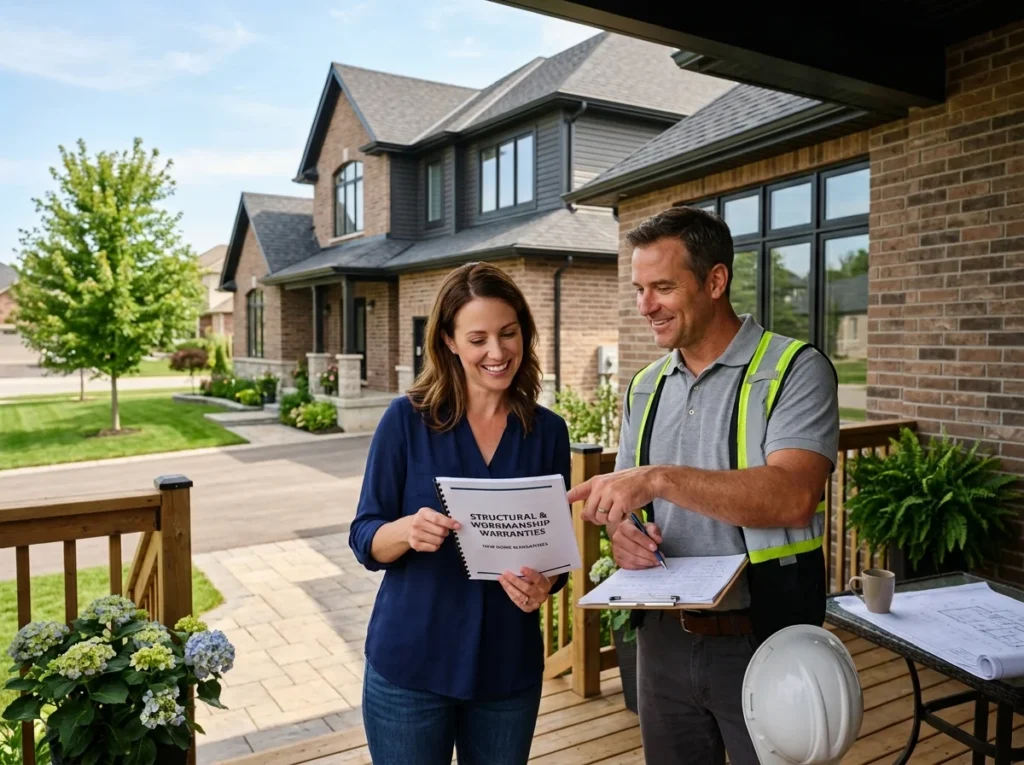
Warranty agreements may separate different types of coverage. Terms such as structural warranty and workmanship warranty can refer to different categories of concerns or different coverage provisions, depending on the agreement.
That distinction is one reason an inspection report should not be presented as a decision about warranty responsibility. A visible crack, installation concern, or other defect may be worth documenting, but whether it falls within coverage depends on the applicable agreement.
Review the homebuilder warranty provided for your property. Pay attention to coverage periods, exclusions, reporting requirements, and deadlines. If the language raises a legal or contractual question, the appropriate professional for interpreting those rights may be different from the home inspector.
A Simple Pre-Expiration Checklist for Naperville Homeowners
This new home warranty checklist in Naperville can help keep the process organized:
- Locate the complete warranty documents.
- Confirm the actual expiration date.
- Review the claim and notice procedure.
- Schedule the inspection with enough time for follow-up.
- Review the inspection report.
- Prepare a documented punch list.
- Submit applicable concerns through the required process.
- Save photographs and correspondence.
- Follow up on unresolved items.
- Keep records of completed repairs.
The purpose is not to create a long list simply because the warranty is ending. It is to make a reasonable review of the property and preserve useful documentation while the applicable warranty process remains available.
FAQ
Is an 11-month warranty inspection required for every new construction home?
No. An 11-month inspection is not a universal requirement for every new construction home. It is a commonly used approach when a warranty provides about one year of coverage. Homeowners should check their own warranty documents for the applicable coverage period, expiration date, and claim requirements.
What is the best time for a builder warranty inspection?
The timing should allow enough time to complete the inspection, review the report, and submit applicable concerns before the warranty deadline. If the warranty covers roughly one year, scheduling before the final month can provide useful time for those steps, but the actual documents should determine your timeline.
Can a warranty inspection help with a builder punch list?
Yes. An independent inspection can identify observable conditions that may be useful when preparing a punch list. The inspector documents what was found, while the homeowner compares those findings with the warranty terms. An inspection does not determine which items the builder is required to address.
Does an inspection guarantee that the builder will make repairs?
No. An inspection documents observable conditions but does not guarantee that a builder will accept a finding or complete a repair. Coverage depends on the applicable warranty terms, exclusions, procedures, and the builder’s determination after the concern is submitted.
Final Thoughts: Inspect Before the Warranty Window Closes
A warranty inspection can give a new homeowner a clearer picture of observable conditions before an applicable warranty period or claim deadline ends. For homeowners in Naperville, that review may identify concerns that only became noticeable after months of normal occupancy and provide documentation that can be considered during the builder’s warranty process.
Sabreezz Home Inspection provides independent home inspection services for homeowners in Naperville, IL. If your new construction home is approaching its warranty expiration, an inspection can provide a documented review of accessible areas and visible conditions before you complete your warranty submission. To discuss a warranty inspection, contact Sabreezz Home Inspection at (773) 312-2511.