

Four-Point Inspection for Older Homes in Cicero & Berwyn, IL

A four-point inspection of older homes in Cicero and Berwyn tends to raise more questions than the same inspection on a newer property, and that makes sense. Most of the housing stock in these two suburbs dates back to the 1910s through the 1940s, with the biggest wave of construction happening during the bungalow boom of the 1920s. Walk down almost any block in Berwyn, and you’re looking at brick bungalows that have outlasted several generations of owners.
That kind of history is part of what makes these neighborhoods appealing, but it also means the roof, electrical, plumbing, and HVAC systems in a lot of these homes have been repaired, replaced, or patched up more than once over the decades. This guide walks through what that actually means for a four-point inspection, system by system, and what tends to come up when I’m out looking at a bungalow in Cicero or Berwyn.
Why Insurers Take a Closer Look at Older Cicero and Berwyn Homes
Insurance companies request a four-point inspection because a home’s age gives them a rough starting point, not a final answer. An older property is statistically more likely to have original wiring, aging pipe materials, or a roof that’s due for replacement. But statistics only go so far. Plenty of century-old bungalows in this area have been fully updated, and plenty of newer additions have shortcuts that never got fixed.
The home’s age alone doesn’t tell an insurer anything about its actual condition. That’s exactly what the inspection is for. Insurers in this part of Illinois are trying to separate the homes that genuinely carry higher risk from the ones that just happen to be old. A well-maintained 1928 bungalow with an updated panel and a newer roof can look better on paper than a 1990s house that’s been neglected. Age triggers the request, but condition is what actually gets reported.
What Roof Inspectors Commonly Find in Cicero and Berwyn Bungalows
Chicago-style bungalows have a distinct roofline, low-pitched and often paired with a front dormer, and that shape shows up constantly in Cicero and Berwyn. On these homes, dormer flashing is often where trouble starts. Water can find its way in around those transitions long before it ever shows up as a visible leak inside the attic.
Beyond the dormer areas, the same things that matter on a bungalow roof matter anywhere else. Age relative to the material’s expected lifespan, curling or missing shingles, granule loss, and any signs of past patch jobs all get documented. A roof that’s had two or three localized repairs over the years isn’t automatically a problem, but it does tell the inspector where to look more closely for water intrusion and other roof inspection issues that might not be obvious from the ground.
From an underwriting standpoint, roof condition carries real weight because it’s one of the more expensive systems to replace and one of the more common sources of a claim. A roof that’s clearly near the end of its service life gets noted as exactly that, an observation, not an automatic disqualifier.
Electrical Systems in Cicero and Berwyn’s Older Housing Stock
Electrical is where I probably get the most nervous questions from homeowners in this area, and I understand why. A lot of these bungalows started out with electrical systems built for a very different era of appliance use, and some still have portions of original wiring somewhere in the walls, including knob and tube in certain sections.
What I actually check is the main panel, the visible wiring, and anything that looks like an amateur modification, things like double-tapped breakers, exposed splices, or a panel that’s clearly been added on over the years without much planning. Outdated panel types get documented specifically, since some are more prone to problems than others.
I want to be direct about one thing here. Finding older wiring types in a home doesn’t mean the property is automatically going to be denied coverage. Every insurance carrier sets its own standards for what it will and won’t accept, and those standards vary quite a bit from one company to the next. What the inspection provides is an accurate picture of what’s actually there, and the carrier decides what to do with that information.
Plumbing Conditions Common in Pre-War Properties
Plumbing tells a similar story. Homes from this era in Cicero and Berwyn were often built with cast iron drain lines and galvanized steel supply lines, materials that were standard practice at the time but that eventually corrode and deteriorate with age. Some homes have been fully repiped with copper or PEX over the years. Others still have long original runs mixed in with newer sections from past repairs.
During the inspection, I’m looking at whatever supply and drain piping is actually visible, checking for active leaks, corrosion, staining, or water damage, along with the age and condition of the water heater. What I can’t do is open up walls or dig under a slab to inspect piping that isn’t accessible. The report reflects what can reasonably be seen and evaluated during a standard visit, nothing more, and that’s an important distinction for homeowners to understand going in.
Deferred maintenance shows up here more than in almost any other system, mainly because plumbing problems tend to stay hidden until they aren’t.
HVAC Equipment Age in Older Berwyn and Cicero Homes
A fair number of bungalows in this area still rely on radiator-based heating systems, sometimes original boilers that have been serviced and kept running for decades, or sometimes newer boilers installed to replace failing originals. Others have been converted to forced air at some point along the way.
For the four-point inspection, what matters is the equipment currently in place: its approximate age, general condition, and whether it operates the way it’s supposed to when tested. Venting gets checked as well, particularly on older boiler setups where the flue configuration hasn’t always kept pace with modern standards. An older furnace or boiler isn’t treated as an automatic problem. Plenty of well-maintained older units are still doing their job just fine. Age is one data point among several, not a verdict on its own.
What Happens When an Older Home Has Documented Issues
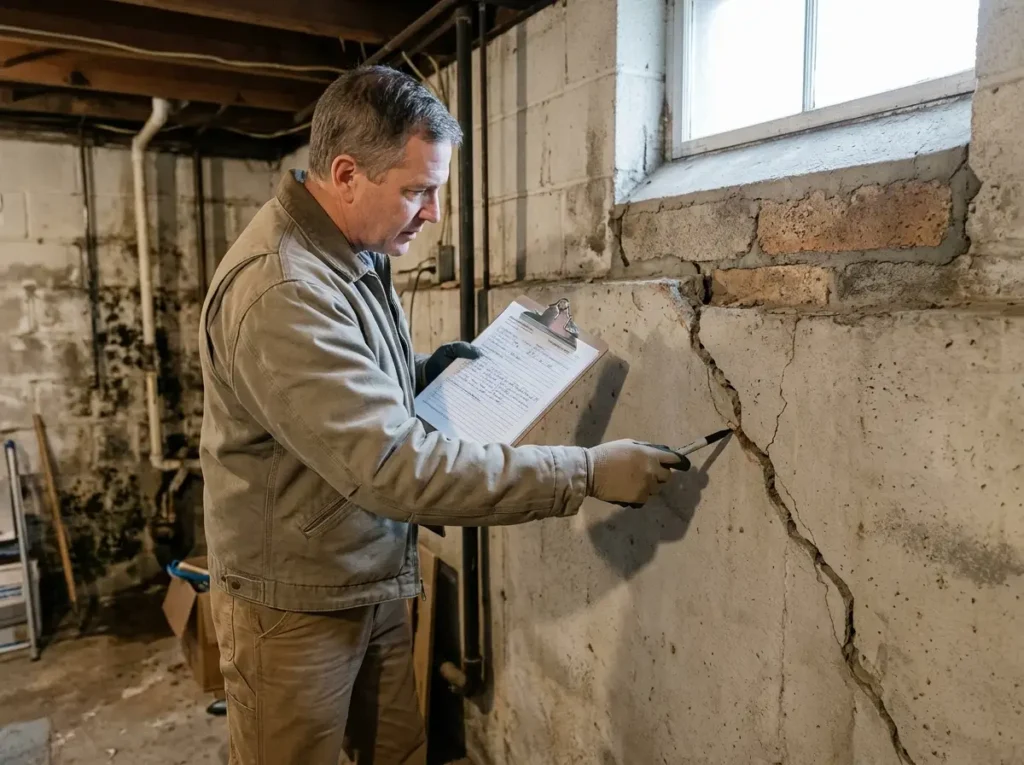
If something comes back flagged in the report, whether that’s the roof, the panel, the plumbing, or the heating system, the inspector’s job stops at documentation. From there, the insurance company reviews the findings and decides what it needs, whether that’s a repair before issuing coverage, additional documentation, or simply proceeding as is. No inspector can tell you in advance exactly how a specific carrier will respond to specific home inspection findings, since that decision sits entirely with the insurer.
Preparing an Older Home for a Four-Point Inspection
A little prep work goes a long way, especially in a home with decades of small modifications layered on top of each other. Clear access to the electrical panel and to the furnace or boiler before the inspector arrives. If you have any paperwork on past repairs or replacements, even something as old as a permit from a previous rewiring job, pull it out ahead of time. Bungalow owners in Cicero and Berwyn sometimes have records going back generations, and that documentation can genuinely help confirm what’s original and what’s been updated before a four-point inspection.
Frequently Asked Questions
Do older homes in Cicero and Berwyn always need a four-point inspection?
Not automatically. Whether it’s required depends on your specific insurance carrier and their underwriting guidelines, not a fixed age that applies across the board.
Does an old electrical system automatically fail the inspection?
No. The inspector documents what’s actually present, including older wiring types. Whether that affects your coverage depends entirely on your insurer’s own standards.
What happens if the roof is near the end of its life?
It gets noted as an observation in the report. The insurance company then decides whether that requires a repair, additional documentation, or has no impact on your coverage at all.
Can an older HVAC or radiator heating system still qualify for insurance?
Often, yes, particularly if the equipment is well maintained and functioning properly. Age alone isn’t treated as a disqualifying factor.
Does a four-point inspection require repairs before coverage is issued?
Sometimes, but not always. It depends on what’s found and how your specific insurer chooses to respond to that finding.
How long does the inspection take for a typical bungalow-style home?
It varies based on the home’s size and how accessible the systems are, but a standard bungalow typically doesn’t take as long as a larger single-family home.
Scheduling a Four-Point Inspection in Cicero or Berwyn
We inspect a lot of older homes across Cicero, Berwyn, and the surrounding Cook County suburbs, and bungalows like these are properties we’re genuinely familiar with. If your insurance company has requested a four-point inspection, we can walk you through what to expect for your specific home. Call us at (773) 312-2511 and book our services.