
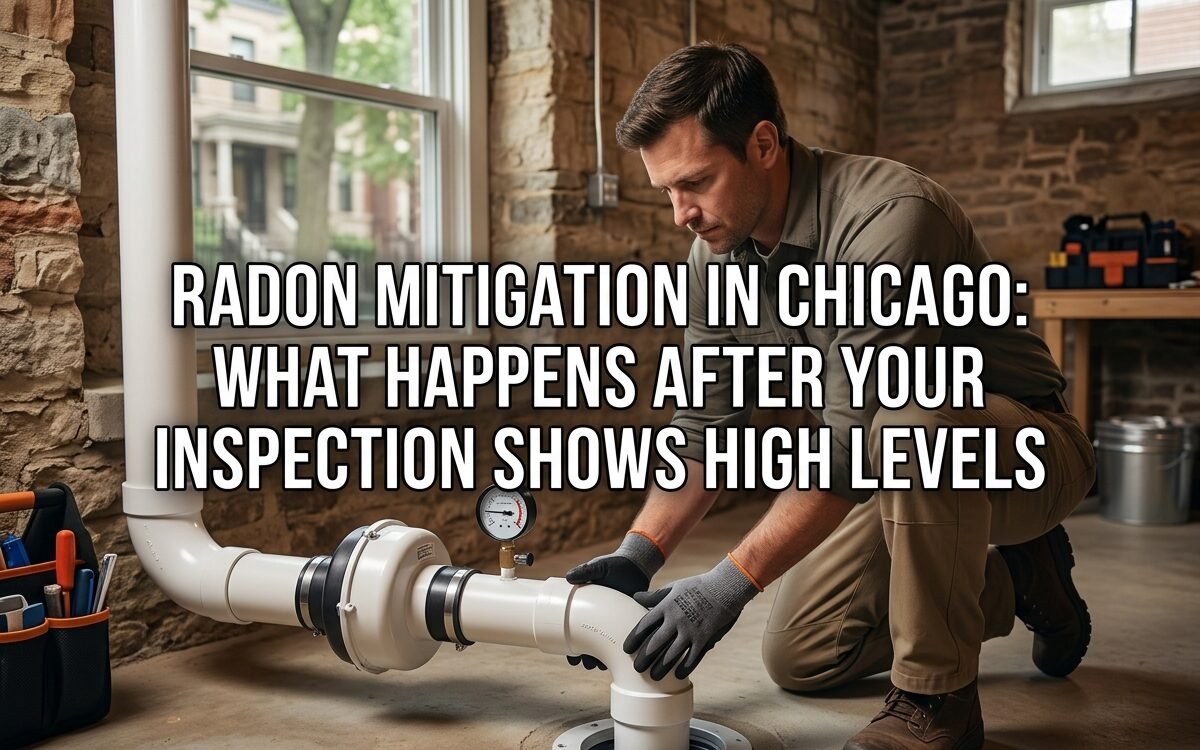
Radon Mitigation in Chicago: What Happens After Your Inspection Shows High Levels
Most Chicago homeowners feel confused at this point. You’ve got high radon in your home. The EPA says you need to act. But what’s the actual process.
Here’s the truth: radon mitigation in Chicago is straightforward once you know the steps. You’ll test your home, get quotes from mitigation companies, install a system, and verify it works. The whole process typically takes 2–4 weeks from inspection to completion.
This guide walks you through exactly what happens after your radon test comes back high. We’ll cover the costs, the installation process, how systems work, and what to expect in your Chicago home.
Understanding Your Radon Test Results
Your Radon inspection report shows a number. That number matters more than you might think.
If your test shows 4 pCi/L or higher, the EPA recommends action. This isn’t a suggestion. It’s a health guideline. Radon is a radioactive gas. Over time, exposure increases lung cancer risk.
Chicago homes commonly show elevated radon levels. The soil composition in and around the city makes radon seepage common. Don’t panic this is fixable. But you do need to move forward.
Your report should list:
- The radon level (in pCi/L)
- The testing period (48 hours minimum)
- The testing method (charcoal canister, digital detector, etc.)
- The room where testing occurred
If you’re between 2 and 4 pCi/L, most experts still recommend mitigation. It’s not required, but it’s smart. If you’re above 4, action is necessary.
Should You Get a Second Test Before Mitigation?
Some homeowners hesitate. They wonder if one test is enough.
A second test isn’t always required. But it’s actually smart. Radon levels fluctuate based on season, weather, and how your home is sealed. A short-term test might catch your home on a bad day.
Here’s what we recommend for radon reduction in Chicago:
Get a second test if your first result was barely above 4 pCi/L. If it was significantly higher (6+), you can skip the second test and move straight to quotes. Radon mitigation companies do post-mitigation testing anyway, so you’ll know your system works.
The second test takes 48 hours and costs $100–$150 in Chicago. It gives you confidence before spending $800–$1,500 on system installation.
Finding and Vetting Radon Mitigation Companies in Chicago
Now you’re ready. Time to get quotes.
Don’t call the first company you find. This is where your due diligence matters. A poorly installed radon system wastes money and won’t protect your family.
What to look for in a Chicago radon mitigation contractor:
Ask about licensing. Illinois doesn’t require specific radon licensing, but reputable companies carry radon-specific certifications through the National Radon Proficiency Program (NRPP) or American Association of Radon Scientists and Technologists (AARST). Call a few companies and ask directly. If they hesitate, move on.
Check references. Ask previous customers about their experience. How long did the installation take Did the company clean up Does the system work.
Compare quotes. Most Chicago companies charge $800–$2,000 for basic active soil depressurization systems. Get at least three quotes. Lower isn’t always better. You want competence, not just a cheap price.
Verify warranty. Good companies offer 5–10 year warranties on labor and equipment. Ask what the warranty covers. Does it include the U-tube manometer? The radon vent pipe? These details matter.
How Radon System Installation Works
Your mitigation contractor arrives on the scheduled day. What actually happens
Most Chicago homes get an active soil depressurization system installed. This is the gold standard. The contractor:
- Finds the install location Usually in the basement or crawl space, near where radon enters. They drill through the foundation to access the soil beneath.
- Installs the intake pipe A 3-inch or 4-inch PVC pipe draws radon-laden air from below the foundation. This happens before your home can pull it inside.
- Runs the exhaust vent Pipe routes upward, typically through an interior wall, roof, or exterior wall. The outlet sits at least 12 inches above the roofline. This prevents radon from re-entering the home.
- Installs the radon pump An electric fan creates the suction that pulls soil gas away from your foundation. It’s mounted in the attic or outside.
- Adds a manometer This U-shaped tube with colored liquid shows your system is working. If the liquid levels are equal, the system is running.
- Tests the system Before leaving, the contractor verifies airflow and pressure differentials.
The whole process takes 4–6 hours for a typical Chicago home. You’ll hear noise during drilling and installation. Expect dust and debris that the contractor cleans up.
What Does Radon System Installation Cost in Chicago?
Budget matters. Here’s what you’ll actually spend.
Radon system installation in Chicago typically ranges from $800 to $2,000 for a basic active system. Prices vary based on:
- Foundation type (basement, crawl space, slab)
- Home size and complexity
- Vent pipe routing (interior vs. exterior)
- Soil conditions
- Whether you need additional suction points
A straightforward basement installation runs $900–$1,200. A crawl space or complex routing might hit $1,500–$2,000.
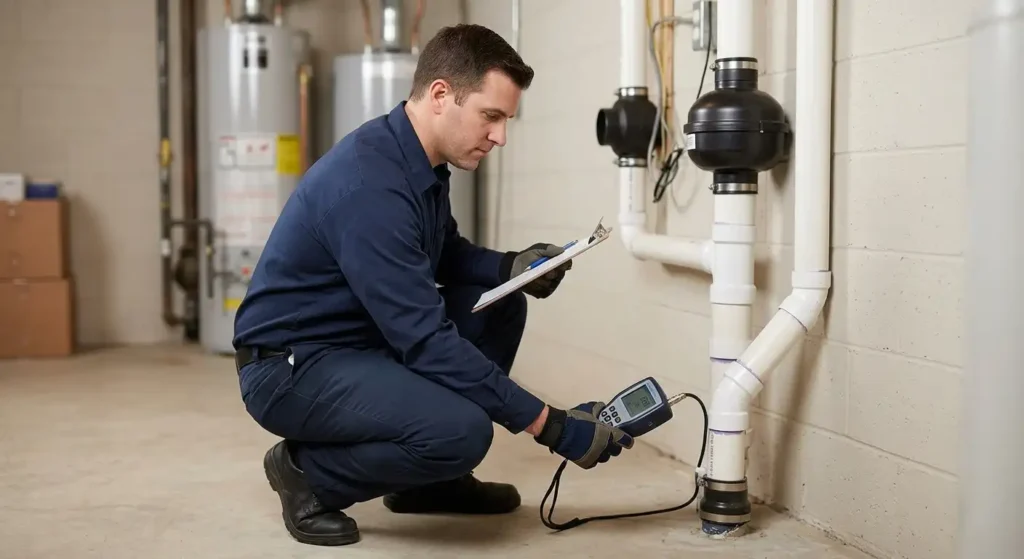
Don’t forget post-mitigation testing. After installation, you need another radon test to confirm the system works. This costs $100–$150 and takes 48 hours. Most contractors include this, but confirm upfront.
Some Chicago homeowners qualify for radon mitigation tax credits or rebates. Check with the Illinois Department of Public Health. A few utility companies offer incentives too. These can offset $200–$500 of your cost.
After Installation: Post-Mitigation Testing
Your new system is running. Now comes verification.
Post-mitigation testing confirms your radon levels dropped below 4 pCi/L. This test runs for 48 hours, same as your initial inspection. Your mitigation contractor arranges it, or you can hire an independent testing company.
Most Chicago systems drop radon levels to 1–2 pCi/L. That’s excellent. If results stay below 4 pCi/L, your system is working.
What if levels don’t drop enough? It’s rare, but it happens. Maybe the first suction point isn’t pulling efficiently. The contractor should return and add a second suction point at no additional labor cost. This typically solves the problem.
Once you get passing results, keep them. File the report. You’ll need it if you sell your home.
What About Ongoing Maintenance
Your radon system doesn’t require much maintenance. But you do need basic upkeep.
Check the manometer monthly. That colored liquid should show a difference in levels, indicating your system is running. If levels are equal, your fan might have failed.
Listen for the fan. You should hear a faint hum from the pump area. If it goes silent, contact your contractor.
Replace the pump if it fails. Most systems run for 5–10 years before the fan wears out. Replacement costs $300–$500. Budget for this.
Annual Radon testing isn’t required by law, but many Chicago homeowners do it. This catches any system failure quickly. Testing costs $100–$150 yearly.
Why Chicago Homes Need Radon Mitigation
Chicago’s geology makes radon a real concern for homeowners.
The city sits on glacial deposits and limestone. These soil types naturally contain radium, which decays into radon gas. Chicago’s humid climate also affects Radon levels. Moisture seeps through basements, and radon rides along.
Radon doesn’t discriminate. Old homes and new construction both get high radon. A fancy home on the North Shore can have worse radon than a modest bungalow in Pilsen. It’s soil-dependent, not socioeconomic.
The good news Radon reduction in Chicago IL is established. Thousands of homes have mitigation systems. Contractors know what works. The process is proven.
Common Mistakes Chicago Homeowners Make
Avoid these pitfalls.
Not getting a second opinion. One company quote isn’t enough. You’re spending $1,000+. Get three quotes and compare.
Choosing based on price alone. The cheapest contractor isn’t always the best. You want experience and warranty backing.
Skipping post-mitigation testing. Don’t assume your system works. Verify it with testing. This is how you know you spent money wisely.
Ignoring the manometer. Check it. If it stops working, tell your contractor. A broken manometer means you can’t verify your system is running.
Forgetting to reseal cracks. Radon mitigation systems work best when your foundation is reasonably sealed. Seal obvious cracks and gaps. This helps the system pull more efficiently.
FAQ:
How long does a radon system last in Chicago?
A properly installed radon system lasts 5–10 years before the pump needs replacement. The ductwork and piping often last 15+ years. Most systems require minimal maintenance. Check your manometer monthly and listen for the fan. If the pump fails, replacement costs $300–$500. Many Chicago homeowners extend system life another 5–10 years with the replacement pump.
Can you sell a home with a radon mitigation system installed?
Yes. In fact, radon mitigation systems increase home value in Chicago. Buyers know the system works. You’ll have post-mitigation testing results to prove it. Disclose the system to potential buyers. Most see it as a plus, not a liability. Keep your testing reports and installation documentation for the sale.
Do you need radon mitigation if your neighbor doesn’t have high radon?
Radon levels vary by lot. Your neighbor’s home might have low radon while yours sits at 6 pCi/L. Soil composition differs within a few feet. Don’t rely on your neighbor’s results. Test your own home. If levels are 4 pCi/L or higher, mitigate regardless of what’s next door.
How quickly do radon levels drop after system installation?
Radon levels drop immediately after a mitigation system runs. The difference is noticeable within hours. Post-mitigation testing takes 48 hours to establish an accurate baseline. Most systems achieve below-4 levels within days. If your first post-test shows elevated levels, your contractor adds a second suction point to increase efficiency.
Can you install a radon system in winter in Chicago?
Yes. Winter installation is common in Chicago. Cold weather doesn’t prevent system installation. The contractor still drills through your foundation and runs piping. Weather doesn’t affect the process. However, scheduling can tighten in winter since more homeowners want mitigation. Book early if you’re testing in fall or early winter.
What’s the difference between passive and active radon systems?
Passive systems rely on natural air pressure to move radon out. They’re cheaper ($300–$600) but less effective. Active systems use a fan to create suction. They cost more ($800–$2,000) but are 99% effective. Chicago contractors typically recommend active systems. Given Chicago’s radon levels, passive systems often don’t reduce radon enough.
Ready to act?
Contact three Chicago radon mitigation contractors this week. Get quotes, ask about certifications, and schedule installation. Your family’s health depends on it.