Radon Levels in Chicago Neighborhoods: Which Areas Have the Highest Risk?
Chicago sits on geology that naturally produces radon gas. This invisible, odorless radioactive element seeps from soil into homes. Some neighborhoods have significantly higher radon levels than others. Knowing which Chicago areas have the highest radon risk helps you protect your family’s health. This guide breaks down radon levels by Chicago neighborhood, explains safe radon levels, and shows you what to do next.
What Is Radon and Why Should Chicago Residents Care?
Radon is a colorless, odorless radioactive gas that comes from decaying uranium in soil and rock. It’s the second leading cause of lung cancer after smoking. When radon enters your home through cracks in foundations, it builds up indoors. Chicago’s soil composition makes radon a real concern for residents.
The Environmental Protection Agency (EPA) classifies radon risk levels across the country. Chicago falls in Zone 1 and Zone 2 areas, meaning potential radon exposure is moderate to high. Many Chicago homes test above the EPA’s recommended action level of 4 picocuries per liter (pCi/L). Unlike other environmental hazards, you can’t see or smell radon. The only way to know if your home has a problem testing.
Your family breathes radon daily without knowing it’s there. Long-term exposure increases lung cancer risk significantly. This is why Chicago health officials recommend testing every home.
Which Chicago Neighborhoods Have the Highest Radon Levels?
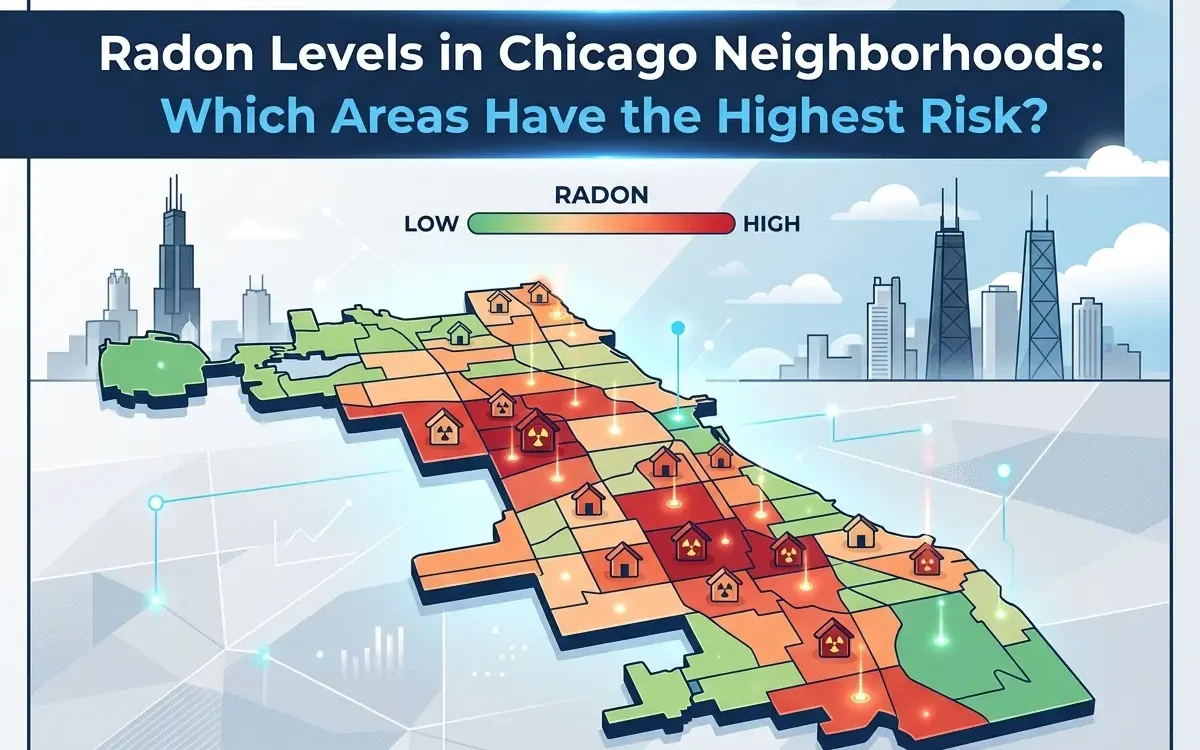
Not all Chicago neighborhoods have equal radon risk. Geology, soil type, and building age create variations. Some areas consistently show higher radon concentrations than others.
The Northwest side of Chicago, including areas like Skokie, Des Plaines, and Park Ridge, reports elevated radon levels. These communities sit on glacial deposits containing uranium and radium. Testing data shows many homes in these neighborhoods exceed the EPA action level. Residents here should prioritize radon testing.
The Southwest side neighborhoods like Alsip, Blue Island, and Oak Lawn also report significant radon levels. Building age matters here too. Older homes with more foundation cracks tend to accumulate higher radon. Many Southwest side homes were built before radon awareness became common.
Downtown and Near North neighborhoods have lower radon levels on average. But individual home testing is still essential. Even low-risk areas can have specific homes with radon problems.
The North Shore suburbs including Evanston, Wilmette, and Winnetka show moderate radon levels. Some specific areas test higher than neighbors. Local geology varies even within the same suburb.
West side neighborhoods like Forest Park and Cicero show mixed results. Some blocks test high while nearby areas remain lower. This inconsistency means you can’t assume your home’s radon level based on neighbors’ results.
Radon Risk by Chicago Area: EPA Zone Classification
Chicago spans EPA radon risk zones. Understanding your zone helps you prepare for testing.
Zone 1 Areas (Highest Risk – Average Above 4 pCi/L)
Zone 1 covers northwestern suburbs and parts of northern Chicago. These areas have the highest predicted radon potential. The EPA estimates that more than 50% of homes exceed the action level. This zone includes communities like:
- Skokie
- Des Plaines
- Park Ridge
- Niles
- Morton Grove
If you live here, radon testing isn’t optional. It’s essential for family health. Most homes in Zone 1 have radon levels requiring action.
Zone 2 Areas (Moderate-High Risk – Average 2-4 pCi/L)
Zone 2 covers the majority of Chicago and inner suburbs. While lower risk than Zone 1, many homes still exceed safe levels. Approximately 25-50% of homes in this zone exceed the EPA action level.
Zone 2 includes:
- Central Chicago neighborhoods
- South suburbs
- Southwest areas
- Some West side communities
Zone 2 residents should test their homes. Results vary significantly even within the same neighborhood. Don’t skip testing because you’re in Zone 2.
Zone 3 Areas (Lower Risk – Average Below 2 pCi/L)
Zone 3 represents the lowest radon risk in the Chicago area. Fewer than 25% of homes typically exceed action levels. But “lower risk” doesn’t mean “no risk.” Individual homes still test high.
Zone 3 includes some downtown areas and specific North Shore locations.
How to Test Radon Levels in Your Chicago Home
Professional Testing is straight forward and affordable. Two main testing methods exist.
Short-Term Testing (2-90 Days)
Short-term tests measure radon for brief periods. They’re quick and inexpensive, usually costing $15-30. You place a passive detector in your lowest occupied level (usually basement) for 2-7 days. The EPA prefers 48-hour minimum tests but recommends 90 days for better accuracy.
Short-term tests work if you need quick answers. But they can’t measure seasonal variations. Radon levels fluctuate throughout the year.
Long-Term Testing (90+ Days)
Long-term tests measure radon over months. They reveal seasonal patterns and give more accurate yearly averages. These tests typically cost $20-50. Results show a more realistic picture of your home’s radon exposure.
The EPA recommends long-term testing for better accuracy. It’s the better choice for making decisions about mitigation.
Professional Testing
Hire EPA-certified radon professionals for the most accurate results. They follow specific protocols ensuring reliability. Professional tests cost $150-300 but provide certified documentation. Many people use professional testing before spending money on mitigation systems.
You can also use both methods. Many Chicago residents run short-term tests first, then follow with long-term testing for confirmation.
Safe Radon Levels Explained: What the Numbers Mean
Understanding radon measurements helps you interpret your results.
EPA Action Level: 4 pCi/L
The EPA recommends taking action when radon levels reach 4 picocuries per liter. This is the standard guideline for Chicago and nationwide. It’s not a “safe” level—it’s a practical level where mitigation becomes important.
Levels Below 2 pCi/L
Levels below 2 pCi/L are considered acceptable by EPA standards. This represents low radon concentration. You don’t need mitigation at this level.
Levels Between 2-4 pCi/L
This gray zone requires consideration. The EPA doesn’t officially recommend action, but some experts suggest mitigation anyway. It depends on your risk tolerance and family health factors.
Levels Above 4 pCi/L
Action is necessary at this level. You should contact radon mitigation professionals immediately. These levels significantly increase lung cancer risk over time.
Levels Above 10 pCi/L
Extremely high levels require urgent mitigation. This represents serious radon accumulation. Most mitigation companies prioritize these cases.
Chicago’s geology means many homes fall above 4 pCi/L. Testing determines your home’s specific level and whether action is needed.
What to Do If You Find High Radon Levels
Finding high radon is concerning, but solutions exist.
Step 1: Confirm Your Results
High initial tests deserve confirmation. Run a second test from a different company or method. Sometimes testing errors occur. Confirmation testing costs little and provides peace of mind.
Step 2: Contact a Radon Mitigation Professional
EPA-certified mitigation specialists assess your home. They determine the best solution for your specific situation. Chicago has many qualified professionals.
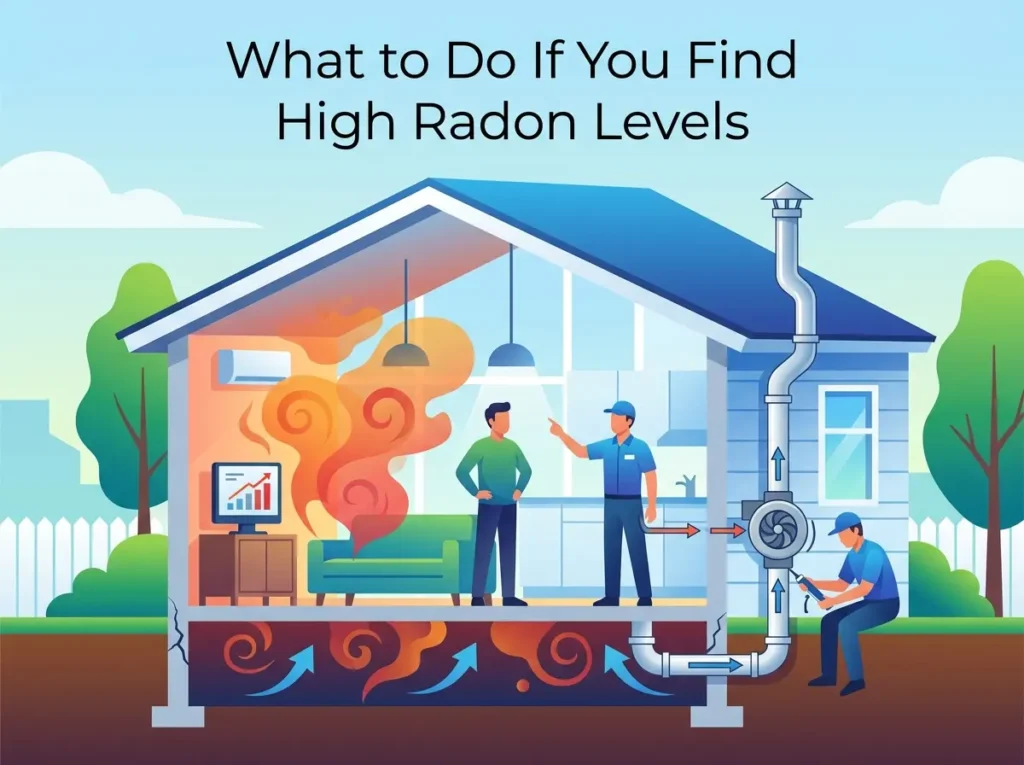
Mitigation typically involves:
- Installing a radon vent pipe system
- Creating negative pressure in your crawlspace or basement
- Sealing cracks and gaps
- Installing sump pit covers
Step 3: Install a Mitigation System
Radon mitigation systems cost $1,000-2,500 in Chicago. Costs vary based on:
- Home foundation type
- Radon level severity
- System complexity
- Geographic location
Most systems reduce radon 90%+ effectively. Professional installation ensures proper function.
Step 4: Retest After Mitigation
Verify your system works by retesting. Post-mitigation testing happens 30 days after installation. Successful mitigation drops radon below 2 pCi/L.
Step 5: Maintain Your System
Radon systems require occasional maintenance. Annual checks ensure continued effectiveness. Replace broken components promptly.
Many Chicago homeowners successfully reduce radon. It’s manageable once you take action.
Radon and Home Selling in Chicago
Radon disclosure matters when buying or selling property in Illinois. Sellers must inform buyers about radon testing knowledge. This creates transparency around radon risk.
As a buyer, request radon testing results before purchase. As a seller, knowing your radon level prevents surprises. Many Chicago real estate agents recommend pre-sale testing.
Homes with high radon aren’t unsellable. You simply need mitigation. Most buyers prefer homes with tested, mitigated radon systems.
Protecting Your Chicago Family From Radon
Beyond testing and mitigation, practical steps reduce radon exposure.
Improve Basement Ventilation
Good airflow reduces radon accumulation. Open basement windows when weather permits. Use fans to move air around.
Seal Foundation Cracks
Caulk visible cracks in foundations and basement walls. This reduces radon entry points. It’s not complete mitigation, but it helps.
Install Sump Pit Covers
Sump pits can be major radon entry points. Sealed, ventilated covers prevent radon entry while managing water.
Test Your Well Water
Radon can also enter through groundwater wells. Chicago municipal water is treated, but well owners should test.
FAQ
How common is radon in Chicago?
Very common. Chicago’s geology creates significant radon potential. EPA data shows 25-50% of Chicago homes exceed the 4 pCi/L action level. Many neighborhoods in Northwest Chicago reach 50%+. Testing reveals your home’s specific risk. Don’t assume you’re safe based on neighbors’ results. Radon varies even within single blocks. Everyone in Chicago should test their home.
Can I reduce radon levels without professional mitigation?
Partially. Simple steps like sealing cracks and improving ventilation help. But professional mitigation systems work 90%+ better than DIY approaches. For levels above 4 pCi/L, professional mitigation is recommended. DIY measures might lower radon slightly but rarely achieve safe levels alone. Professional systems are cost-effective compared to lung cancer risks.
What’s the best time to test for radon in Chicago?
Fall and winter show highest radon levels. This is when homes are sealed tight and temperature creates pressure differences. Testing during these months provides worst-case scenarios. Some recommend testing in winter for maximum accuracy. But radon can spike any season. Long-term testing reveals year-round patterns better than seasonal testing.
Does radon affect renters in Chicago?
Yes. Renters breathe the same radon as owners. Landlords should provide radon information. Tenants can request radon testing. If levels are high, ask your landlord about mitigation. Some Chicago apartments have mitigation systems installed. Knowing your radon level protects your health regardless of ownership status.
How much does radon mitigation cost in Chicago?
Most systems cost $1,000-2,500. Simpler cases run $800-1,500. Complex situations exceed $3,000. Costs depend on foundation type, radon severity, and system complexity. Get multiple quotes before deciding. Some radon companies offer payment plans. Consider this investment in family health, not just home improvement.
Should I buy a home with high radon in Chicago?
It’s not disqualifying. Homes with high radon sell after mitigation. A professional system costs less than many home improvements. Many Chicago homes have radon systems. This is fixable unlike some structural issues. Make informed decisions knowing your radon level and mitigation costs. Negotiate system installation into your purchase if needed.
Ready to protect your Chicago home Start with radon testing today. Your family’s health is worth the $20-30 investment. Most Chicago neighborhoods show some radon risk. Testing reveals your home’s specific situation. Then you’ll know exactly what steps to take next.