
Commercial Property Inspection Guide for Chicago Investors

A commercial property inspection is a detailed evaluation of a building’s physical condition. The goal is to identify visible defects, safety concerns, maintenance issues, and major system problems that could affect the property’s value or operation.
Unlike a residential inspection, commercial inspections are often broader in scope. Commercial buildings are larger, more complex, and may contain specialized systems. Investors rely on inspection findings to assess risks and negotiate repairs or pricing before completing a transaction.
Commercial inspection services can be customized based on the type of property, its age, and the investor’s goals. The final report typically includes findings related to the structure, roof, electrical systems, plumbing, HVAC equipment, and life safety features.
Why Commercial Property Inspections Matter for Investors
A property may look well maintained from the outside. However, hidden issues can significantly affect ownership costs. A professional inspection helps uncover these problems before they become financial burdens.
For investors in Chicago, commercial inspections are especially important due to the city’s aging building inventory and seasonal weather conditions. Harsh winters, heavy snowfall, temperature swings, and moisture exposure can impact roofs, foundations, and building systems over time.
A thorough inspection can help investors:
- Identify costly repairs before purchase
- Understand immediate maintenance needs
- Improve negotiation leverage
- Support financing requirements
- Plan future capital expenditures
- Reduce liability risks
- Protect long-term investment value
Many lenders and commercial buyers view inspections as a critical part of due diligence.
What Does a Commercial Inspection Cover?
The scope of a commercial inspection depends on the property type and client requirements. Most commercial inspection services evaluate the major components that affect safety, operation, and building performance.
Structural Components
The structural system forms the foundation of the building’s stability. Inspectors assess visible conditions that may indicate deterioration or movement.
Common areas reviewed include:
- Foundations
- Load-bearing walls
- Columns
- Beams
- Floors
- Ceilings
- Exterior walls
Signs of settlement, cracking, water intrusion, or structural damage are documented for further evaluation if needed.
Roofing Systems
A commercial roof inspection is one of the most important parts of the process. Roof repairs and replacements can represent a major expense for property owners.
Inspectors examine:
- Roofing materials
- Membranes
- Drainage systems
- Flashing
- Roof penetrations
- Signs of leaks
- Ponding water
- Weather-related damage
Chicago’s climate places additional stress on commercial roofs. Snow accumulation, freeze-thaw cycles, and severe storms can shorten roof life if maintenance is neglected. A commercial roof inspection helps investors understand the roof’s current condition and estimate future replacement costs.
HVAC Systems
Heating and cooling systems directly affect tenant comfort and operational efficiency. HVAC equipment is inspected for visible defects, performance concerns, and maintenance issues.
Inspectors typically review:
- Rooftop units
- Furnaces
- Boilers
- Chillers
- Air handlers
- Ventilation components
- Thermostat controls
Older systems may still function properly but could require replacement sooner than newer equipment.
Electrical Systems
Commercial electrical systems must safely support building operations and tenant needs. Inspectors evaluate accessible electrical components for signs of wear, damage, or safety concerns.
Areas commonly reviewed include:
- Main service equipment
- Distribution panels
- Wiring
- Disconnects
- Grounding systems
- Lighting components
Electrical deficiencies can lead to costly repairs and potential safety hazards if left unresolved.
Plumbing Systems
Water supply and drainage systems are examined for visible issues that could affect building performance.
Inspectors assess:
- Supply piping
- Drain lines
- Water heaters
- Fixtures
- Restrooms
- Signs of leaks
- Water damage
Water intrusion can create long-term problems if not addressed early.
Understanding Office Building Inspection Requirements
An office building inspection focuses on systems and components that affect tenant use, safety, and operational efficiency. Office properties often contain complex infrastructure that requires careful evaluation.
Inspectors examine common areas, tenant spaces, mechanical rooms, elevators when applicable, and building support systems. Accessibility concerns, life safety systems, and maintenance conditions may also be reviewed.
For office investors in Chicago, inspections can reveal deferred maintenance that may not be obvious during a standard property tour. Even small issues can add up quickly across multiple floors and tenant spaces. An office building inspection provides valuable insight into future ownership costs and potential lease-related concerns.
What Is Included in an Industrial Property Inspection?
Industrial properties often require a specialized approach. Warehouses, manufacturing facilities, distribution centers, and logistics buildings contain systems that differ from traditional commercial structures.
An industrial property inspection typically focuses on:
- Structural systems
- Loading docks
- Warehouse floors
- Industrial electrical equipment
- Ventilation systems
- Roofing systems
- Fire suppression systems
- Site drainage
- Exterior pavement
Industrial buildings often experience heavy use. Equipment vibration, forklift traffic, storage loads, and manufacturing operations can impact building components over time. A detailed industrial property inspection helps investors understand whether the facility can support current and future operational needs.
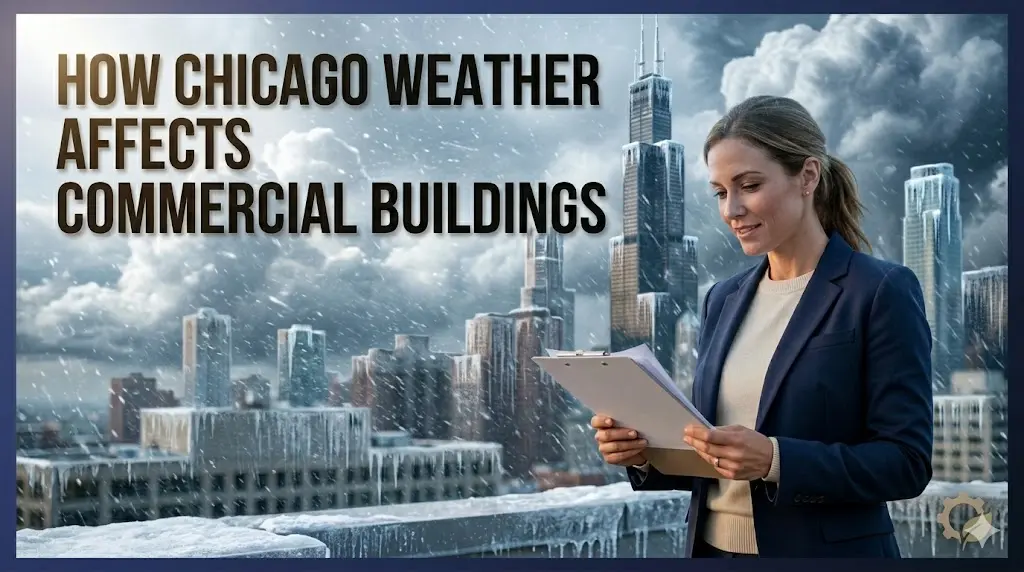
How Chicago Weather Affects Commercial Buildings
Chicago weather creates unique challenges for commercial property owners. Buildings face year-round exposure to environmental conditions that can accelerate wear and tear.
Winter weather often causes:
- Roof stress from snow loads
- Ice dam formation
- Freeze-thaw damage
- Pipe freezing risks
Spring and summer storms may contribute to:
- Water intrusion
- Roofing damage
- Drainage issues
- Exterior deterioration
These conditions make routine inspections even more important. Investors should pay close attention to roof condition, drainage performance, masonry integrity, and moisture-related concerns during the inspection process. Properties that appear well maintained may still contain hidden weather-related damage.
When Should Investors Schedule a Commercial Inspection?
The best time to schedule a commercial property inspection is during the due diligence period. This allows enough time to review findings before finalizing the purchase.
Early inspections provide several advantages:
- More time for repair negotiations
- Better budgeting for improvements
- Reduced closing delays
- Stronger investment analysis
Investors should avoid waiting until the final stages of a transaction. Discovering major defects late in the process can create unnecessary complications. Commercial inspection services are often coordinated with environmental assessments, appraisal reviews, and financial due diligence activities.
How to Choose Commercial Inspection Services in Chicago
Not all inspectors have experience with commercial properties. Investors should choose professionals who regularly inspect buildings similar to the property being purchased.
When evaluating commercial inspection services, consider:
- Commercial inspection experience
- Property type expertise
- Report quality
- Turnaround time
- Certifications and qualifications
- Knowledge of Chicago building conditions
A detailed report should clearly explain findings, identify significant concerns, and provide photographs that support observations. The goal is not simply to create a checklist. The inspection should help investors understand risk and make informed decisions.
What Happens After the Inspection?
Once the inspection is complete, investors receive a detailed report outlining observations and recommendations. The findings can influence negotiations, budgeting, and long-term planning.
Common next steps include:
- Requesting repairs
- Negotiating purchase price adjustments
- Seeking specialist evaluations
- Creating maintenance plans
- Updating financial projections
Some findings may be minor maintenance items. Others could involve major capital expenditures that affect investment performance. Reviewing the report carefully helps investors prioritize concerns and determine whether the property aligns with their investment goals.
FAQ
How long does a commercial property inspection take?
The length of a commercial property inspection depends on the building size, property type, and inspection scope. Small office buildings may take several hours, while larger industrial facilities can require a full day or more. Additional time is often needed to review documents and prepare the final report. Investors should allow enough time during due diligence to evaluate findings properly.
Is a commercial roof inspection necessary when buying a property?
Yes. A commercial roof inspection is one of the most valuable parts of the due diligence process. Roof replacement costs can be significant, especially on larger buildings. An inspection helps identify leaks, drainage problems, membrane deterioration, and weather-related damage. Understanding roof condition before purchase can prevent costly surprises after closing.
What is the difference between an office building inspection and an industrial property inspection?
An office building inspection focuses on tenant spaces, common areas, HVAC systems, accessibility concerns, and general building operations. An industrial property inspection often includes loading docks, warehouse floors, industrial electrical systems, specialized ventilation, and manufacturing-related infrastructure. The inspection scope varies based on how the building is used.
How much do commercial inspection services cost?
Commercial inspection costs vary depending on building size, complexity, age, and inspection scope. Larger properties generally require more time and resources. Specialized systems may also increase costs. While inspections represent an upfront expense, they often save investors money by identifying issues before a purchase is completed.
Can a commercial inspection help with price negotiations?
Inspection findings often provide valuable leverage during negotiations. If significant repairs or maintenance issues are discovered, buyers may request repairs, credits, or price adjustments. A detailed inspection report gives investors documented evidence to support negotiation discussions and protect their financial interests.
Should investors inspect newer commercial buildings?
Even newer properties can contain construction defects, maintenance concerns, or system performance issues. Age alone does not guarantee a building is free from problems. A commercial property inspection provides an independent assessment that helps investors confirm the property’s condition and identify potential concerns before closing.