

Chicago Commercial Inspection Costs: 2026 Pricing Guide
If you own commercial property in Chicago, you’ve probably wondered about inspection costs. They’re not the same as residential inspections. Buildings are bigger, more complex, and way more expensive. That’s why prices vary wildly sometimes between $2,000 and $10,000 for the same property.
This guide breaks down what you’ll actually pay for a commercial inspection in Chicago right now. You’ll learn what affects the price, what inspectors include, and how to avoid overpaying.
What Is a Commercial Property Inspection?
A commercial inspection is a detailed walkthrough of your building. The inspector checks everything the roof, HVAC systems, electrical panels, plumbing, structural integrity, and safety codes. It’s way more thorough than a residential inspection. They’re looking for expensive problems that could cost you tens of thousands down the road.
This isn’t just about making sure the building stands up. It’s about understanding what you’re really buying or investing in. A licensed building inspector will document everything they find. You get a detailed report with photos, measurements, and recommendations. It protects you legally too. If something goes wrong later, you’ll have documentation showing you did your due diligence.
Commercial Inspection Costs in Chicago: The Real Numbers
Let’s talk money. A typical commercial inspection in Chicago costs between $2,500 and $8,000 in 2026. But that’s a wide range for a reason.
Small properties like a single-floor office space under 5,000 square feet usually run $2,500 to $3,500. Medium-sized buildings (5,000 to 20,000 square feet) fall in the $3,500 to $6,000 range. Larger commercial properties or multi-story buildings? You’re looking at $6,000 to $10,000 or more. Some inspectors charge by the hour instead of a flat fee. That’s typically $75 to $150 per hour. For a 5,000 square foot building, you’re looking at 8 to 12 hours of inspection time.
The Chicago area specifically tends to run slightly higher than national averages. That’s because buildings here are older many dating back 50, 75, or even 100+ years. Older structures need more time to inspect properly. Plus, Chicago has strict building codes. Inspectors need to check whether the property meets current regulations.
What Affects Commercial Inspection Pricing?
Several factors change the final bill. Understanding these helps you anticipate costs and compare quotes fairly.
Building Size Matters Most
The bigger the building, the longer the inspection takes. It’s that simple. A 3,000 square foot building takes 4 to 6 hours. A 30,000 square foot building takes 15 to 20 hours. More time equals more money.
Age and Condition
Old buildings cost more to inspect. Chicago’s got plenty of 1920s-era warehouses and office buildings. These need extra attention. The inspector has to evaluate outdated wiring, aging roofs, and potential asbestos. Buildings in poor condition also take longer. Every issue needs documentation.
Building Type
A retail space on one floor is simpler than a medical office with specialized HVAC systems. Manufacturing facilities cost more because they’ve got industrial equipment. Multi-story buildings with elevators, fire suppression systems, and complex mechanical rooms? Definitely pricier.
System Complexity
Some buildings have standard HVAC, electrical, and plumbing. Others have rooftop HVAC units, multiple panels, generator systems, and backup power. More systems mean more inspection time.
Location Within Chicago
Downtown Chicago properties sometimes carry premium pricing. Inspectors might charge more if travel time is significant. But honestly, that’s usually just 10-15% of the total cost.
What’s Included in a Commercial Inspection?
You need to know exactly what you’re paying for. Here’s what a reputable inspector will cover.
Structural Components
The inspector examines the foundation, walls, columns, and roof structure. They look for cracks, settling, water damage, and rust. They’ll check if structural repairs are coming soon.
Roof and Drainage
They’ll walk the roof if it’s safe. They document condition, remaining lifespan, and needed repairs. They check gutters, downspouts, and drainage systems to make sure water isn’t collecting anywhere.
HVAC Systems
The heating, cooling, and ventilation systems get a thorough check. They test equipment, check ductwork, and confirm systems are operating properly. They’ll note if units are near end of life.
Electrical Systems
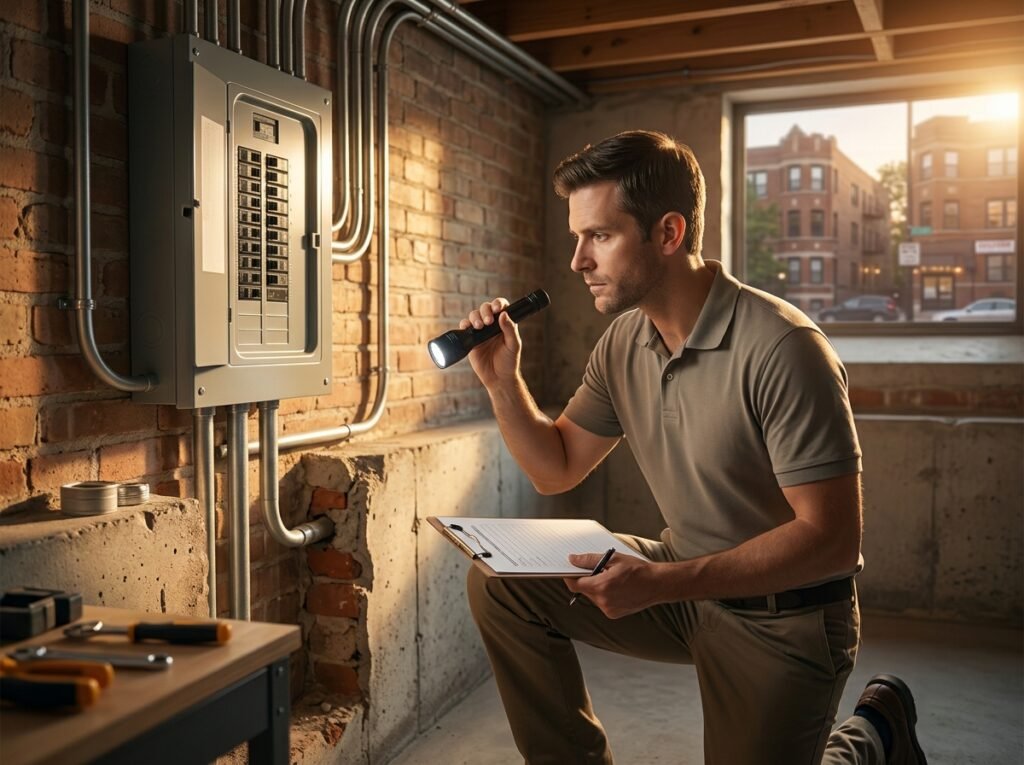
The panel gets inspected. They check for proper grounding, code violations, and fire hazards. They verify the system can handle current demand.
Plumbing and Water Systems
Pipes, fixtures, water heaters, and pressure systems all get evaluated. They check for leaks, corrosion, and functionality.
Building Envelope
Windows, doors, caulking, and weatherstripping are examined. Water intrusion is a major issue in Chicago, especially with our winters.
Safety Systems
Fire suppression systems, emergency exits, alarms, and lighting get checked. They confirm systems meet code.
Interior Condition
Flooring, walls, ceilings, and general cleanliness matter. The inspector documents whether surfaces are damaged or failing.
How to Find a Qualified Inspector in Chicago
Not all inspectors are equal. You want someone licensed and experienced with commercial properties.
Illinois requires commercial inspectors to be licensed. Check their credentials before hiring. A licensed building inspector has passed exams and knows Chicago’s building codes inside out. Some inspectors are certified through ASHI (American Society of Home Inspectors) or NAHI. These certifications mean they follow professional standards.
Get at least three quotes. Call local inspectors, explain your property type and size, and ask for estimates. Compare what’s included some inspectors cover more ground than others. Read reviews. Check Google, Yelp, and industry websites. Talk to other commercial property owners. They’ll tell you who’s worth the money.
Ask about their inspection timeline. A proper inspection takes time. If someone quotes you 2 hours for a 10,000 square foot building, they’re probably cutting corners. Ask for a sample report. You want to see detail not just a checklist.
What To Expect During the Inspection
Inspections usually take between 4 and 12 hours depending on size. The inspector will arrive with tools moisture meters, electrical testers, and usually a ladder.
You’ll probably walk through with them. They’ll explain what they’re checking and answer questions. They’ll take photos of problem areas. At the end, they’ll discuss major findings but won’t give you the full report that day. The detailed report comes later, usually within 3 to 5 business days.
The report will include written descriptions, photos, and recommendations. It’ll note what needs immediate attention and what can wait. Everything gets organized by building system.
Boulder and Northern Colorado Property Owners
If you’re comparing costs across markets, know that Boulder and Northern Colorado typically charge less around $2,000 to $5,000 for similar properties. Chicago runs higher due to building age, code complexity, and market rates. Don’t assume you’re being overcharged just because Chicago costs more. You’re usually paying for expertise in older buildings.
Should You Get a Commercial Inspection?
If you’re buying a commercial property, absolutely yes. If you’re a tenant considering a long-term lease, maybe. If you own the building and it’s never been formally inspected, yes. It costs money upfront but saves you from expensive surprises.
FAQ:
How Long Does a Commercial Inspection Take?
Most inspections take 4 to 12 hours depending on building size and complexity. Smaller properties (under 5,000 square feet) typically take 4 to 6 hours. Larger buildings take longer. The inspector needs time to check every system thoroughly. You’ll usually get the full report within a few business days, not immediately after the inspection.
Can I Get a Cheaper Inspection?
Yes, but be careful. Cheaper inspectors might skip important areas. Compare what’s included, not just price. A $1,500 inspection might miss things a $4,000 inspection catches. You’re protecting a huge investment—don’t skimp too much. Getting three quotes is smart. Look for licensed inspectors with good reviews, not the cheapest option.
Do I Need an Inspection for a Lease?
If you’re signing a multi-year commercial lease, an inspection protects you. You’ll document the building’s condition before you move in. That way, you won’t be blamed for existing problems. Some landlords resist, but it’s reasonable to ask. It’s less critical for short-term leases, but still useful.
What Happens If Major Problems Are Found?
The inspector documents everything in their report. You’ll know exactly what needs fixing and rough costs for repairs. You can negotiate with the seller to fix issues, reduce the price, or walk away. The inspection gives you leverage in negotiations. It’s why inspections exist.
How Often Should I Inspect My Building?
If you own the building, get a full inspection every 3 to 5 years. More often if the building is older or you’ve had problems. You could do simpler, cheaper walk-throughs in between. This catches problems early before they become expensive.
What’s the Difference Between an Inspection and an Appraisal?
An appraisal determines the building’s value. An inspection documents its condition. You need both. The appraiser cares about market value. The inspector cares about problems and safety. They serve different purposes but are both important for commercial property deals.
Conclusion
Commercial inspection costs in Chicago range from $2,500 to $8,000 for most properties. Size, age, and complexity drive the price. It’s money well spent. You’re protecting yourself from expensive surprises and making informed decisions about a major investment. Find a licensed inspector with solid reviews, get multiple quotes, and don’t just pick the cheapest option. Your buildingand your wallet will thank you.