

Final Inspection for a New Construction Home in Chicago: What Buyers Should Check Before Closing
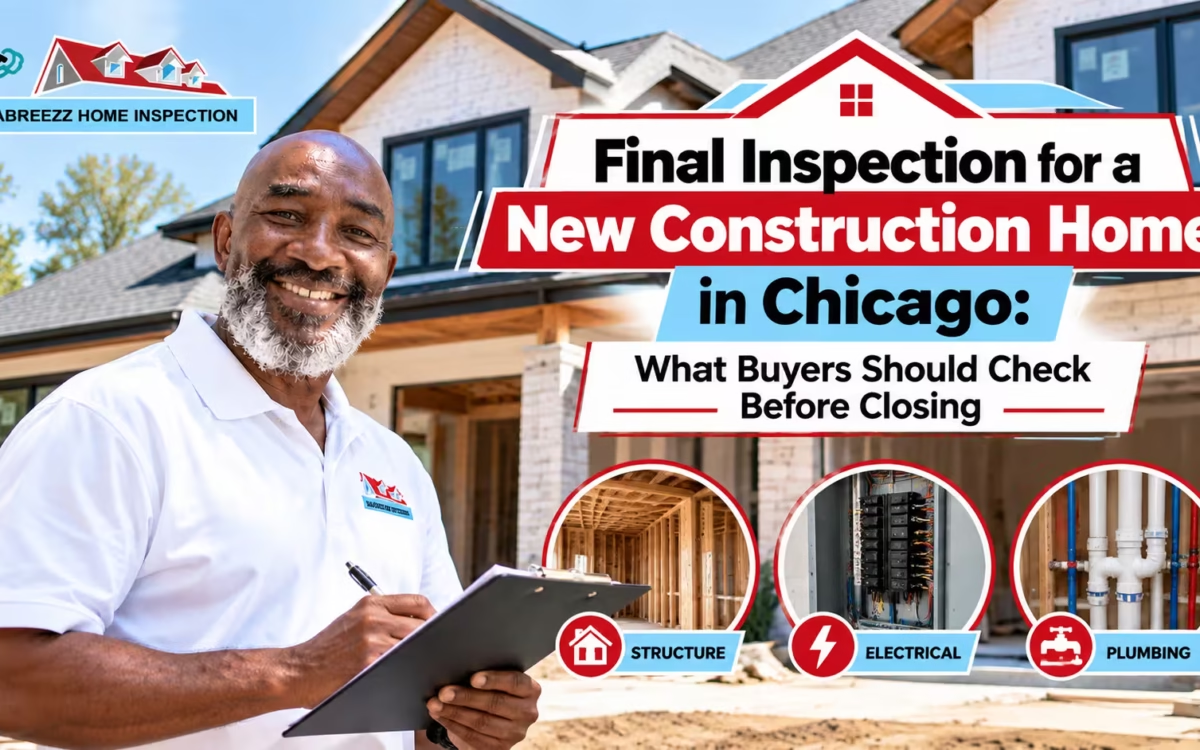
Your closing is two weeks out, and the builder says the house is done. The floors shine and the appliances still wear their stickers. None of that proves the dishwasher drains or the yard slopes away from the foundation. Fresh paint can make a house look finished long before every part of it works.
A new construction final inspection in Chicago puts independent eyes on the home while there’s still time to act. Your inspector checks visible and accessible components within an agreed scope. This guide covers what to check and how to document findings. It also explains how to handle open concerns before closing day.
Why Should Buyers Arrange a Final Inspection Before Closing?
New houses go up fast. Many crews work on tight schedules, often in the same rooms. Each trade can bump, cover, or undo the last one’s work. So a house can be substantially complete and still have problems. Installation errors slip through. Some items never get finished.
A New Home Can Still Have Construction Defects
Rushed finishing work causes plenty of new home defects. A trim carpenter racing the clock leaves gaps. A crew sliding in the refrigerator gouges the hardwood. Other flaws slip by because nobody rechecked. An inspection finds visible concerns within its scope. It can’t see behind the drywall.
How an Independent Inspection Differs From a Builder Walkthrough
These visits ask different questions. You hire the inspector, who checks visible and accessible components within the agreed scope. The report comes to you. A builder representative usually runs the walkthrough. They show you features and note unfinished or cosmetic items. Both visits help. Neither should automatically replace the other.
When Should You Schedule a New Construction Final Inspection in Chicago?
Timing can make or break this visit. Book too early, and fixtures are missing. Book too late, and you run out of days. Late-fall closings add a Chicago wrinkle. Snow can hide grading. Cold weather may rule out testing the air conditioning. The walkthrough comes later. Both fit within the stages of new construction home inspection in Chicago.
- Wait until flooring, fixtures, and appliances are installed.
- Leave time to review findings with the builder.
- Confirm site access and working utilities.
- Raise significant items before contractual deadlines.
What Should the Inspector Check Inside the New Home?
Inside, the inspector reviews visible finishes. They also run the systems that can be safely operated. The exact scope depends on the property and your inspection agreement. Ask about that scope before the visit. Then you’ll know what’s included and what might need a specialist.
Walls, Ceilings, Floors, and Interior Finishes
Drywall takes a beating in a build’s final weeks. Inspectors look for cracks and trim gaps and patches nobody painted. Floors get checked for uneven spots and loose planks. Chipped tile gets noted too. A scuffed baseboard is a touch-up. A ceiling stain below a bathroom could signal a leak.
Doors, Windows, and Electrical Components
Accessible doors and windows get opened, closed, and latched. Sticking doors and windows that won’t lock go in the report. Switches, outlets, and light fixtures are tested on a representative basis. A dead outlet gets flagged. So does a GFCI that won’t reset. Concealed wiring isn’t fully tested.
Plumbing Fixtures, HVAC Operation, and Appliances
The inspector runs the faucets, showers, and toilets. Drains get watched for slow flow and leaks. Heating and cooling equipment runs with the thermostat when conditions permit. Many inspectors skip central air in cold weather because it can strain the compressor. Connected appliances get a basic test. Specialists handle deeper diagnosis.
What Exterior Areas and Building Components Need Attention?
The outside of a new house shows how water will move around it. That makes the exterior worth a slow look. The inspector evaluates what can be seen and safely reached. Conditions on the day matter too. A wet roof or a snowy yard can limit what anyone sees.
Roof, Foundation, and Exterior Finishes
Roof access depends on pitch, height, and weather. Some roofs get walked. Others are viewed from below. Inspectors look for damaged shingles and loose flashing. Low-slope city roofs get checked for standing water and open seams. Foundation walls and siding get checked for cracks. A crack alone doesn’t prove a structural problem. It may justify an engineer’s review.
Grading, Drainage, and Water Management
Soil next to the walls should slope away so rain and snowmelt drain off. Fresh backfill can settle and leave low spots. Inspectors note soil pitched toward the house and puddles near the foundation. Downspouts dumping water at the wall get flagged too. That describes today’s conditions. It doesn’t predict flooding.
Garage, Exterior Doors, and Other Accessible Features
Garage doors get cycled, and the auto-reverse gets tested. That can include a detached garage off the alley, which is common behind many Chicago homes. Entry doors, railings and steps get checked. Property features decide part of what gets assessed. Scope and site conditions decide the rest.
How Should Buyers Document Defects and Builder Corrections?
A report sitting in your inbox fixes nothing. Findings help only when you understand them. You also need to explain them to the builder. Good records make that easier. They show what was found and when. They also show what the builder agreed to do.
Review the Inspection Report and Identify Priority Concerns
Read the whole report, not just the summary. Put cosmetic touch-ups in one pile and incomplete work in another. Safety concerns and items needing more evaluation come first. Ask your inspector about anything unclear. This guide to reading a home inspection report in Chicago covers common red flags.
Create a Clear Punch List With the Builder
A punch list is the written list of items to fix or finish. Write entries a stranger could locate. “Primary bath left sink drains slowly” works. “Plumbing issue” doesn’t. Add photos where useful. Get the builder’s correction plan in writing. Your contract and the finding decide what gets repaired.
Confirm the Status of Outstanding Work
Ask the builder three things. What’s finished? What’s still open? How will completion be documented? Some buyers book a re-inspection to verify corrections. The builder may decline certain items. Some work may stay open past closing. Get each answer in writing so nothing rests on memory.
| Keep one running record.Log each finding, the builder’s response, and its status in one document. Date every update. |
What Should Buyers Confirm During the Final Walkthrough?
The walkthrough serves a different purpose than the inspection. It’s your last check of current conditions and agreed items before closing. Bring your punch list. Walk each room slowly. Keep its limits in mind. A walkthrough can’t replace the professional inspection. It can’t rule out hidden defects either.
- Agreed corrections are complete or documented.
- No new damage, leaks, or stains have appeared.
- Included appliances and fixtures work.
- Doors and windows are still open, closed, and locked.
What If the Inspection Reveals Problems Before Closing?
Finding problems days before closing is stressful. It happens. A clear sequence helps you stay calm. Resolutions depend on your contract and the finding. They also depend on what the parties agree to. Whether to close on schedule is a decision for you and your attorney.
- Review the finding with your inspector.
- Share findings with the builder and other parties.
- Ask for a written response on corrections or unresolved items.
- Review your purchase agreement with your agent or attorney.
Final Inspection Checklist for New Construction Buyers
This quick list tracks your independent inspection. It doesn’t track the builder’s own completion process. Treat it as a summary. It won’t replace the report or your contract. Tick a box only after you’ve seen the result yourself or confirmed it in writing with the builder.
- Interior finishes, floors, and fixtures are assessed.
- Plumbing and HVAC are evaluated where conditions permit.
- Exterior, roof, and drainage concerns are considered.
- Builder corrections are documented.
- The final walkthrough and closing are coordinated.
Frequently Asked Questions
Buyers tend to ask the same few things as closing nears. Some wonder whether the inspection is worth it. Others want to know how it differs from the walkthrough. Many ask what happens when problems show up late. The short answers below cover each one.
Is a Final Home Inspection Necessary for a New Construction Home?
It’s usually optional, but it deserves serious thought. A newly built home isn’t automatically problem-free. Many crews touched it in a short time. An independent inspection can reveal visible defects and incomplete work. It can also catch installation concerns while there’s still time to raise them.
Is a Final Inspection the Same as a Builder Walkthrough?
No. Your inspector evaluates visible and accessible components within an agreed scope. They report to you, not the builder. A builder walkthrough generally focuses on completion and features. It also covers outstanding items. The two visits serve different purposes, so one doesn’t cover for the other.
What Happens if the Inspector Finds Defects Before Closing?
Share the findings with the builder. Loop in your agent or attorney too. Ask for proposed corrections in writing. Then review your contractual options based on the issue and your agreement. If a finding needs a specialist, book that visit quickly. Your closing date won’t wait.
Final Thoughts
A final inspection turns vague worries into clear items. Sabreezz Home Inspection is a Chicago-based company offering residential home inspections with photo-supported reports. It also provides re-inspections to check whether reported issues were addressed. Buying a newly built home in Chicago or Cook County? Contact the team or call (773) 312-2511 to discuss scheduling.