
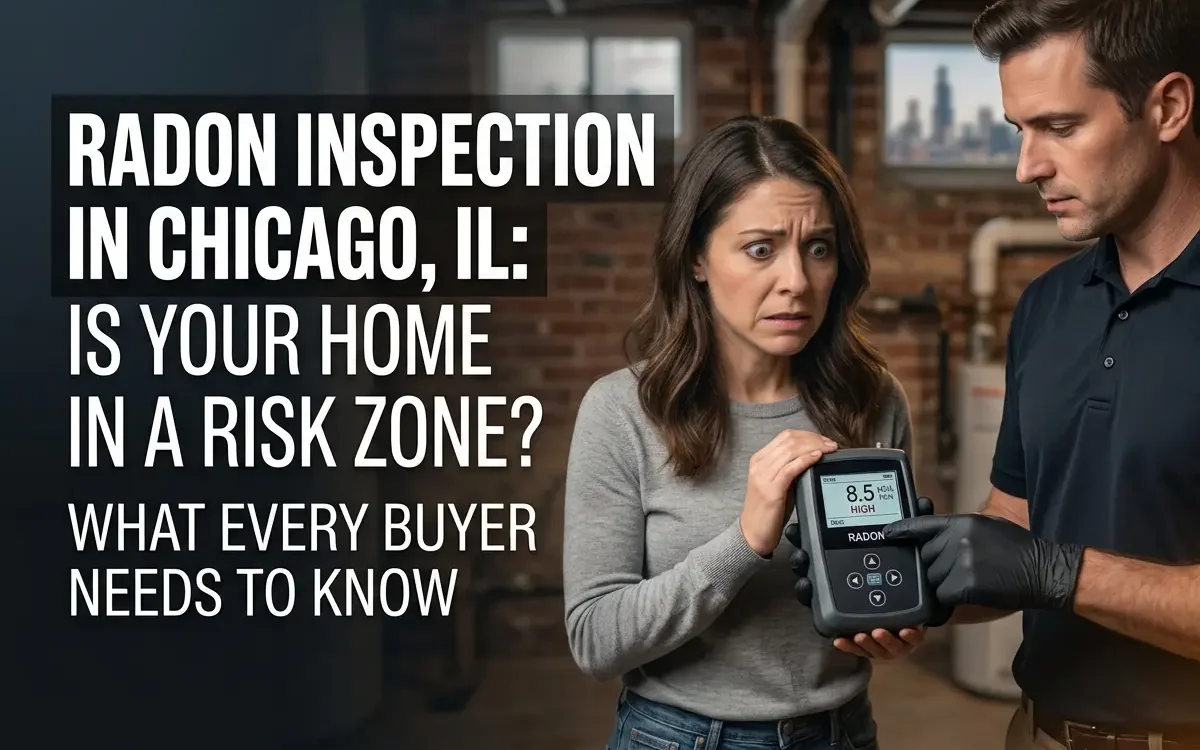
Radon Inspection in Chicago, IL: Is Your Home in a Risk Zone? What Every Buyer Needs to Know
Radon doesn’t smell. You can’t see it. But it’s lurking in many Chicago homes right now. This colorless, odorless gas comes from natural uranium decay in soil. It seeps into basements through cracks and gaps. The problem Radon is the second leading cause of lung cancer after smoking. In Illinois, radon levels are higher than the national average. If you’re buying a home in Chicago or already own one, a radon inspection isn’t optional, it’s essential. This guide covers everything you need to know about radon testing in Chicago, how much it costs, and what to do if you find elevated levels.
What Is Radon and Why Does Chicago Have a Problem?
Radon is a naturally occurring radioactive gas produced when uranium breaks down in soil and rocks. It travels upward through the ground and enters buildings through foundation cracks, gaps around pipes, and other openings. Chicago sits in a region with moderate to high radon potential. The EPA classifies much of Illinois as Zone 1 and Zone 2, meaning radon levels are elevated compared to other parts of the country. Your home’s radon risk depends on your neighborhood, soil composition, and how well your foundation seals against the gas. Even new construction in Chicago isn’t immune. Radon doesn’t discriminate between old and new homes.
The danger is real. The EPA estimates radon causes about 21,000 deaths per year in the U.S. Long-term exposure increases lung cancer risk significantly. If you smoke and live with radon, your risk multiplies. This is why Radon testing Chicago homeowners and buyers should treat seriously.
Who Should Get a Radon Inspection?
Anyone buying a home in Chicago needs a radon inspection. Period. Home inspections often miss radon because you can’t detect it without special equipment. The EPA recommends all homes be tested. If you already own your home and haven’t tested yet, do it now. Families with children should prioritize testing. Kids spend time in basements, playrooms, and lower levels where radon concentrates most.
Radon testing is especially critical if:
- You’re buying a home in Chicago with a basement
- Your home is older and has foundation cracks
- Neighbors have found elevated radon levels
- Your home sits on a hill or in an area with granite soil
- You notice settlement cracks in your foundation
- You use your basement as a living space
Real estate transactions in Chicago often require radon testing as part of the inspection period. Even if not required, it’s smart to test before buying. Sellers may negotiate radon mitigation costs during closing.
How Much Is a Radon Inspection? Chicago Pricing Explained
Radon testing in Chicago typically costs between $150 and $300 for a basic short-term test. Most homebuyers choose this option during the inspection period. Here’s the breakdown:
Short-Term Testing (2–7 Days) A short-term radon test costs $150 to $250. The radon inspector places a device in your basement (usually the lowest lived-in area). It measures radon levels for 48 hours to 7 days. Results come back quickly. This is the standard for real estate transactions. Chicago home inspectors often include radon testing in their package for an additional $75 to $150.
Long-Term Testing (3–12 Months) Long-term tests run $200 to $400. They measure radon levels over several months, giving a more accurate picture of your year-round exposure. Long-term testing is better for making mitigation decisions if levels are borderline. The EPA recommends long-term testing for follow-up after mitigation.
Multiple Location Testing If you want tests in multiple rooms or levels, expect to pay $50 to $100 per additional location. Most radon inspectors recommend testing the lowest level and any finished basement spaces.
Radon System Inspection If your home already has a radon mitigation system, a radon system inspection costs $150 to $250. The inspector checks if the system works properly and levels remain safe. Annual inspections after mitigation are recommended.
Mitigation Cost If testing reveals elevated radon (above 4 pCi/L), you’ll need mitigation. A radon mitigation system in Chicago costs $800 to $2,500 depending on your home’s layout and soil type. Basic sealing and ventilation work less than active soil depressurization. This is separate from testing costs.
Don’t skimp on radon testing cost. A $150 test could save your family’s health.
The Radon Inspection Process: What to Expect
Understanding what happens during a radon inspector visit in Chicago homes makes the process less mysterious. Here’s how it works:
Pre-Test Preparation Your radon inspector will ask you to keep windows and doors closed for 12 hours before testing (some recommend 24 hours). This allows radon to accumulate naturally. Avoid using exhaust fans or opening windows during the test. The goal is to measure your home’s actual radon levels under normal conditions.
Device Placement The inspector places a radon detection device in the lowest lived-in area of your home. That’s usually your basement. If you have a finished basement bedroom, testing happens there. The device sits undisturbed for 48 hours to 7 days. Modern testers use electronic monitors that track radon concentration in real time.
Measurement and Recording The device measures radon in picocuries per liter (pCi/L). EPA’s action level is 4 pCi/L. Anything above this suggests mitigation is needed. Your radon inspector documents temperature, humidity, and atmospheric conditions. These factors affect radon levels.
Results and Report After testing ends, you’ll receive a detailed report. It shows radon levels, testing dates, atmospheric conditions, and recommendations. If levels are above 4 pCi/L, the report recommends mitigation. Results typically arrive within 1 week.
Follow-Up Testing If mitigation is installed, follow-up testing confirms the system works. Testing happens 24 hours after the system runs. Post-mitigation levels should drop significantly ideally below 2 pCi/L.
Most radon inspections take 30 minutes. You don’t need to be home during testing, though some homeowners prefer to be present.
Radon Levels in Chicago: What’s Normal?
The EPA recommends action if radon levels reach 4 picocuries per liter or higher. This is the threshold where health risk becomes significant. But even lower levels warrant concern. Below 2 pCi/L is ideal. Between 2 and 4 pCi/L, the EPA suggests considering mitigation, especially for homes occupied long-term.
Many Chicago homes test between 2 and 6 pCi/L. Some neighborhoods show consistently higher readings. Areas near the Fox River or with certain soil types often have elevated levels. Your radon inspector can tell you if your specific area of Chicago typically runs high.
Seasonal variation happens. Radon levels often spike in winter when homes are sealed tight and air pressure differences draw more radon inside. Summer testing may show lower readings. This is why long-term testing gives better data for decision making.

Do You Need Radon Mitigation Chicago Solutions
If your radon inspector finds levels above 4 pCi/L, mitigation isn’t optional it’s necessary. Mitigation reduces radon risk by up to 99%. Here’s what mitigation involves:
Active Soil Depressurization This is the most common and effective method. A contractor installs a plastic pipe through your foundation into the soil below. A fan pulls radon-laden air from beneath your home and vents it safely above the roofline. The cost ranges from $1,000 to $2,500 in Chicago. It’s permanent and requires minimal maintenance.
Passive Systems Some homes have passive radon systems installed during construction. These work without a fan but are less effective. Contractors can convert passive to active systems by adding a fan.
Sealing and Ventilation Basic sealing of foundation cracks and gaps helps but isn’t enough for high radon. Proper ventilation combined with sealing provides modest improvement. This approach costs $300 to $800 and works best for borderline levels (4-8 pCi/L).
Basement Waterproofing Fixing cracks and water issues during basement waterproofing can slightly reduce radon entry. It’s not mitigation but helps prevent radon pathways.
Most Chicago homes with high radon get active depressurization systems. They’re reliable, affordable long-term, and reliable. After installation, your radon inspector should retest to confirm effectiveness.
Radon Testing During Real Estate Transactions in Chicago
If you’re buying a home in Chicago, radon testing happens during the inspection period. Illinois law doesn’t mandate radon testing, but it’s standard practice. Here’s how it fits into your transaction:
Timing Radon testing occurs during your inspection period, usually 7–10 days after going under contract. Your home inspector or a separate radon specialist handles it. Results come back before your inspection period ends.
Negotiation Points If testing reveals elevated radon (above 4 pCi/L), you have options. Request the seller install mitigation before closing. Negotiate a credit toward mitigation costs. Ask for a price reduction. Have a radon specialist provide a mitigation quote to support your negotiation.
Contingency Clauses Many Chicago purchase agreements include radon contingency clauses. This lets you walk away if radon levels are too high and the seller won’t mitigate. Your real estate agent should include this protection.
Seller’s Responsibility In Illinois, sellers aren’t required to disclose radon test results, but many do. If a seller had previous testing, ask for those results. Pre-sale mitigation can actually help you sell faster in Chicago’s competitive market.
Getting a radon inspection before making an offer isn’t common but gives you more leverage. Some buyers pay for pre-offer testing to avoid surprises.
How to Choose a Radon Inspector in Chicago
Not all radon inspectors are equal. Choose someone qualified and certified. Here’s what to look for:
Certification Matters Look for inspectors certified by the National Association of Radon Inspectors and Analysts (NARIA) or the National Environmental Health Association (NEHA). Illinois requires radon contractors to be licensed. Certification shows they know proper testing protocols.
Experience in Chicago Your radon inspector should understand Chicago’s specific radon patterns and soil conditions. Someone who’s tested hundreds of local homes brings valuable knowledge. Ask how many homes they’ve tested in your neighborhood.
Impartial Testing Choose an inspector with no financial interest in mitigation results. If they sell mitigation systems, there’s a conflict of interest. Independent inspectors give you honest readings.
Equipment Quality Modern electronic radon monitors are more accurate than older charcoal canisters. Ask what equipment they use. Proper calibration and maintenance matter. Your inspector should follow EPA testing protocols exactly.
References and Reviews Check online reviews and ask for references. Real estate agents often recommend trusted inspectors. Ask how long they’ve been in business and their background.
Cost Comparison Get quotes from 2–3 inspectors. Prices vary from $150 to $300 for short-term tests. Extremely low prices might indicate corners being cut. Extremely high prices don’t guarantee better results.
A good radon inspector in Chicago will explain results clearly, answer your questions, and help you understand next steps if mitigation is needed.
Radon Mitigation System Inspection and Maintenance
Once mitigation is installed, your radon system needs regular inspection. Annual radon system inspection ensures continued effectiveness. Here’s why it matters:
Annual Testing Retest your home annually after mitigation. This confirms the system maintains safe levels. Some homeowners skip this, but it’s crucial. System components can fail silently.
System Maintenance Radon mitigation systems are low-maintenance but need attention. Check that the vent fan is running (you should hear it). Ensure the vent pipe hasn’t separated or been damaged. Look for obstructions around the outdoor vent exit.
Vent Pipe Inspection Walk around your home’s exterior and check the radon vent pipe. It should extend at least 12 inches above your roofline or 2 feet above any window. Snow or debris shouldn’t block it. Clear any blockages immediately.
Fan Replacement Radon fans typically last 5–10 years. If your system is 7+ years old, consider replacing the fan proactively. A failed fan means radon protection stops working silently.
Cost of Maintenance Annual radon system inspection costs $100 to $200. Fan replacement runs $400 to $800. These costs are small compared to the health protection mitigation provides.
Neglecting radon system inspection defeats the purpose of mitigation. Stay on top of it.
FAQs: Radon Inspection in Chicago
How long does a radon inspection take?
A radon inspection typically takes 20 40 minutes. The inspector places the detection device in your basement and documents conditions. You don’t need to be home during the actual testing period (usually 48 hours to 7 days). The device works independently. When the test finishes, getting results takes 1–2 weeks. From start to finish, expect 2–3 weeks total for a complete radon testing process and results.
Can I test for radon myself in Chicago?
You can buy DIY radon test kits online for $15 to $40. These charcoal canisters sit in your basement for several days, then you mail them to a lab. Results take 1–2 weeks. DIY kits work but are less reliable than professional testing. Improper placement or handling can skew results. For real estate transactions, professional testing is expected and protects you better legally.
What happens if radon levels are high in my Chicago home?
If radon exceeds 4 pCi/L, you need mitigation. Contact a licensed radon mitigation contractor for a quote. Most homes can be fixed with an active soil depressurization system costing $1,000 to $2,500. The system pulls radon from under your home and vents it safely above the roofline. After installation, retest to confirm effectiveness. Proper mitigation typically reduces radon by 75–99%. Living with high radon untreated poses serious health risks.
Are radon inspections required when buying a home in Chicago?
Radon testing isn’t legally required in Illinois, but it’s standard in real estate transactions. Most purchase agreements include radon contingencies. Your lender may require it for mortgage approval. Smart buyers always test before buying. During inspection periods, radon testing is expected and negotiated into deals. Skipping it is risky you could inherit a high-radon problem.
How often should I test for radon in my Chicago home?
Test once initially and after any radon system installation. Then retest annually if mitigation is in place. If levels were low (below 2 pCi/L), you can test every 2 years for peace of mind. Some experts recommend retesting every 5 years even without mitigation. If your foundation develops new cracks or you notice moisture issues, test again. Radon levels can change over time as soil conditions shift.
Can opening windows reduce radon in Chicago homes?
Opening windows temporarily dilutes radon levels but isn’t a solution. During winter in Chicago, heating costs make constant ventilation impractical. Radon returns quickly when windows close. Mitigation systems are the only reliable long-term fix. Increasing ventilation slightly helps but won’t bring high levels below 4 pCi/L. Never rely on open windows as your radon solution.
Ready to protect your Chicago home
Contact a certified radon inspector today. Radon testing takes 2 weeks and costs under $300. Ignoring radon puts your family’s health at risk. In Chicago, radon isn’t a maybe it’s a must.