
What’s The Most Common Home Inspection Issue?
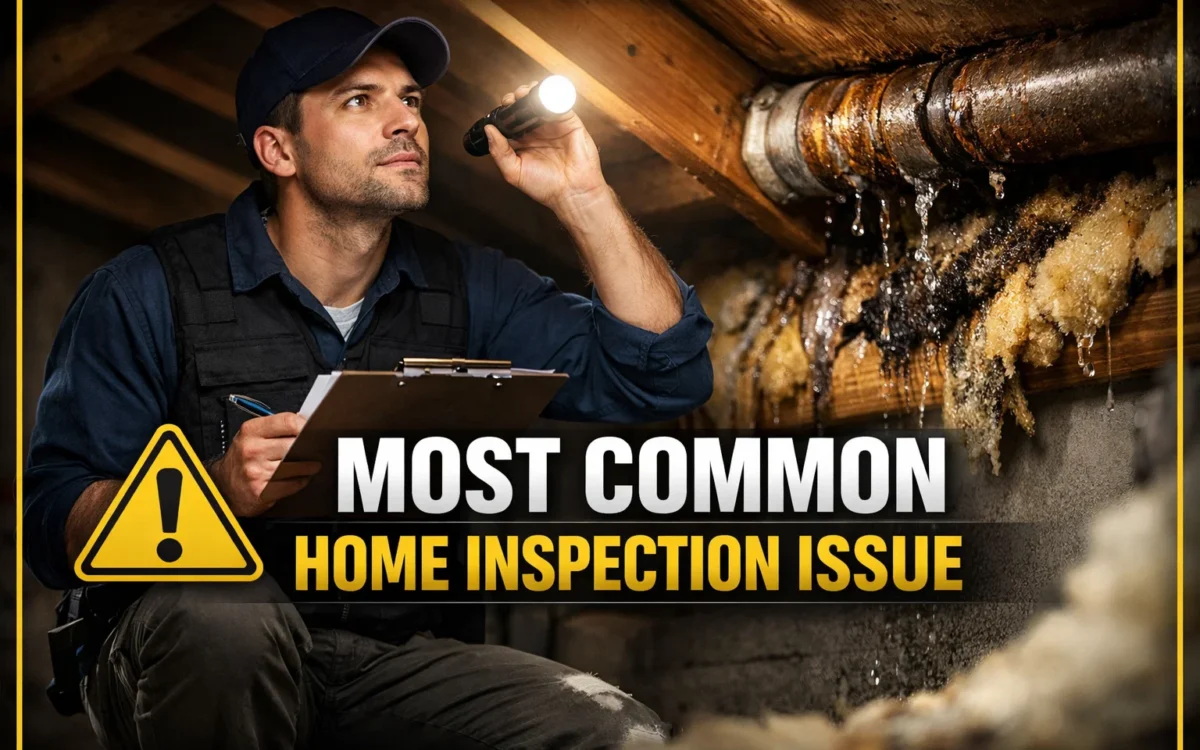
Home inspectors examine hundreds of houses annually, and they might discover various failures, depending on the location they are in. Nevertheless, regardless of the places where an inspector resides, there are certain issues that are encountered by all inspectors.
The following are the most common home inspection problems and flaws that are detected, so that you become aware of what to look for during your own home inspection!
Roofing Problems
Problems with roofing are highly common among home inspectors during inspections. It is because of the fact that structures older than ten years start becoming susceptible to roof damage.
The traditional asphalt shingles roofs have an average lifespan of 15-40 years, depending on the location and the climatic conditions at that location. Geographically harsher areas usually need more roof repairs, such as those with extremely hot sun or a lot of storms.
In common home inspection findings, the damages to roofs are easy fixes, such as those caused by missing shingles. But there may be structural damage or soft areas that are not easily repairable, and these may prove costly.
Minor Structural Damage
In any house, minor structural damage may be an issue, whether it is old or not. Although the causes of such damage can be very different, a universal solution is that when a home is modified or new structures are added without taking into consideration the structures that are already in place, this may cause damage. The building materials of the foundation used in the past may be more prone to failure and decay in some of the older houses that were erected in the 19 hundreds.
Another crucial aspect to consider is that there is a high possibility of devastating damage in case of an earthquake. Regular home structure and crawl space inspections and the remedy of any minor damages immediately when noticed are vital to ensure that more serious problems are avoided.
Electrical Wiring Issues
Stripped wires, underpowered circuit breakers, open wiring that was left after a previous repair or remodeling, etc., are typically discovered by the professionals. These problems are perceived to be a risk to the safety of residents and should be addressed immediately.
To a larger extent, this is a problem in older homes. The majority of the homes that were built recently have a rich stock of electrical power, and they are fitted to fulfill all the present electrical standards and principles.
This may become a big problem following an inspection based on the gravity of the wiring mishaps. It may be an easy repair, or it may entail complete modernization of the electrical system, depending on the faults the inspector detects.
Indoor Air Quality Issues
Indoor air quality can have a serious influence on the health and well-being of occupants in case it is poor. An example of such a problem that has been on the rise is the existence of mold and mildew in the attics and crawl spaces. Surprisingly, this issue occurs more in the new homes than in the homes that were constructed during the 1900s to 1980s. This is due to the fact that modern houses focus more on energy efficiency and compromise air quality.
To be more precise, the rate of poor air quality is higher in the homes constructed after 1995 because they use house wraps. These wraps enhance energy efficiency but may also obstruct ventilation, leading to the trapping of moisture. Molds are likely to occur as a result of that.
HVAC problems
The problem of heating and cooling systems is one of the frequent problems found during home inspections. Among the simplest things that homeowners are not performing is having their HVAC professionally serviced and maintained regularly. Besides, people should regularly replace or clean the filter of their HVAC system since dirt and debris build up in your filter can block the airflow, making it work harder.
The unclean filters may impose unnecessary tension on the furnace and damage the heat exchanger. When the heat exchanger (the element that conveys heat to the circulating air) breaks, carbon monoxide vapours from the fuel combustion may leak into the ductwork. It poses a great danger to your family and yourself.
Problematic Attic Insulation and Ventilation
Older homes generally have ventilation problems and energy efficiency issues. Insulated attics that are not properly ventilated are frequently found by home inspectors and are therefore hot in the summer.
This non-ventilation will increase the difficulty of keeping the house cool, as well as cause mold and other problems. It will not be so energy efficient with poor ventilation since the cool air is able to enter it during the winter months, while it becomes increasingly more difficult to maintain coolness during summer.
Lack of Proper Drainage Around the Place
The drainage problems may not usually pose much problem before an inspector conducts an inspection, since it does not rain frequently and persistently to pose a gigantic danger to the people living in houses. But the bad drainage is actually a major problem.
When water surrounds the foundation of a house, and it is not able to drain, it may lead to mold. And there may also be problems with the foundation of the house, such that it may collapse.
The grade and drainage system surrounding houses is often found by the inspectors to be retaining water, which can be leaking into the basement or wearing away and disintegrating the foundation.
Plumbing Problems
Plumbing issues are quite common and also very serious. Even minor visual flaws such as leaks, slow drainage, and low water pressure can actually indicate big underlying issues. The big plumbing problems are very expensive when it comes to repairing them, and this is the reason why the inspectors take a lot of care when inspecting the system.
The minor problems, however, are usually simple to fix. Unless the inspector discovers that there are some significant defects, it should not be a huge problem. But occasionally, the inspection officers get systems that are incurable and require replacement.
Conclusion
There will be very few homes that will go without typical home inspection issues during the inspection. The trick is to know what issues constitute serious safety or fiscal concerns and which ones are trivial maintenance issues.
Sabreezz Home Inspection can be very helpful in clarifying the action points for the things that need fixing, or you may want the sellers to compensate for them in one way or another.
FAQs
What are the most reported home inspection defects?
Inspectors often find safety problems like broken or missing smoke alarms and stairs or handrails that aren’t safe. They also point out things like cracked walkways and uneven steps that could cause someone to trip, as well as electrical setups that aren’t safe.
Are problems with the foundation or structure common?
Yes, common structural issues in home inspections are some of the most serious ones that people report. Inspectors look for cracks in walls, floors that aren’t level, and signs of settling or movement. These things can be signs of structural problems that need to be looked at by an expert.
How bad are plumbing problems that are found during inspections?
There are both small plumbing problems (like loose hose connections) and big ones (like corroded pipes). Inspectors often flag old or broken pipe materials and leaks that are easy to see, since even small leaks can cause mold and water damage if they aren’t fixed right away.