
Best Home Inspection Services in Chicago: A Buyer’s Guide
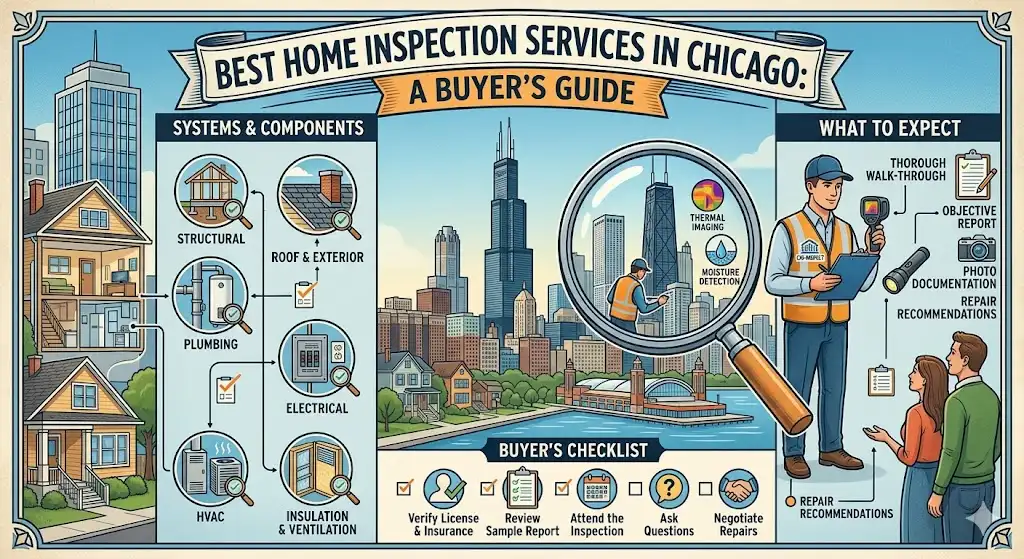
Buying a home is one of the largest investments you’ll ever make, and a professional home inspection helps ensure you’re making an informed decision. In a city like Chicago, where properties range from historic brick homes to modern condominiums, inspections are especially important because building age, weather conditions, and local construction styles can all affect a property’s condition.
A qualified home inspector evaluates the home’s major systems and structural components, including the roof, foundation, plumbing, electrical systems, HVAC equipment, insulation, and more. Their findings can reveal hidden issues that may not be visible during a standard walkthrough, helping buyers avoid unexpected repair costs after closing.
For Chicago homebuyers, inspections can also identify concerns related to harsh winters, moisture intrusion, basement water damage, aging masonry, and outdated electrical or plumbing systems—issues that are relatively common in many neighborhoods throughout the city.
Ultimately, a thorough home inspection provides valuable insight into a property’s overall condition, strengthens your negotiating position, and gives you greater confidence before completing your purchase.
What a Home Inspection Really Does for You
Open with a transitional line explaining why this matters before diving into specifics.
- Define a home inspection as an unbiased look at a property’s overall condition.
- Clarify the difference between an inspection and an appraisal in simple terms.
- Explain why inspections happen after an offer is accepted, while under contract.
- Note how findings help buyers negotiate repairs or pricing.
Why a Licensed Inspector Matters in Illinois
Lead with a short transition about why licensing isn’t just a formality.
- Explain that Illinois inspectors follow the state’s Standards of Practice (IDFPR-regulated).
- Cover how licensing and a “home inspection certification” signal training and accountability.
- Outline the risks of hiring unlicensed inspectors, like missed defects and no liability protection.
- Mention reputable memberships like InterNACHI and ASHI as quality markers.
What the Best Chicago Inspectors Have in Common
Add a transition, noting the traits that separate strong inspectors from the rest.
Local Experience With Chicago Homes
- Familiarity with older housing stock, masonry, and condo structures.
- Knowledge of common regional issues like basement flooding and aging electrical.
Detailed, Photo-Filled Reports
- A clear report should include photos, defect explanations, and next steps.
- Reports delivered fast, often within 24 hours.
Modern Inspection Tools
- Thermal imaging, moisture meters, and sewer scopes to find hidden problems.
- Tie tools to real value: catching issues invisible during a showing.
What Inspectors Check (Your Home Inspection Checklist)
Transition into the systems covered before listing them.
- Use a bulleted “home inspection checklist” for clarity:
- Roof, attic, and insulation
- Foundation and structure
- Plumbing and electrical systems
- HVAC performance
- Basement moisture and mold
- Exterior grading and drainage
Common Problems Found in Chicago Homes
Add a transition about regional quirks buyers should expect.
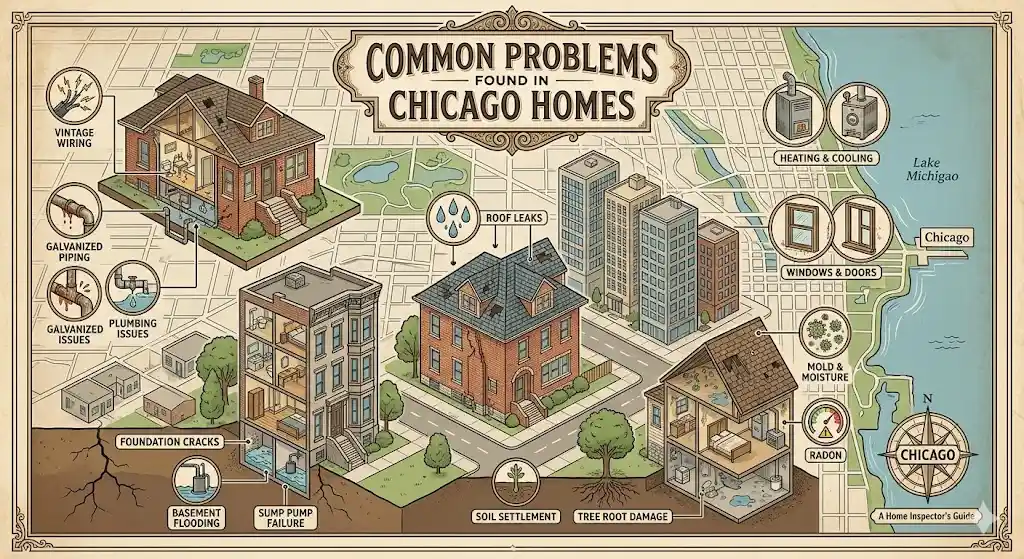
- Aging infrastructure in older bungalows and two-flats.
- Water damage and basement flooding are tied to local weather.
- Roof wear from harsh Chicago winters.
- Outdated electrical and code issues in older buildings.
- Mention how add-on tests (mold, radon, termite) address regional concerns.
How to Choose the Right Inspector
Transition into a practical decision-making framework.
- Compare reviews and local reputation.
- Verify licensing and insurance.
- Ask to see a sample report.
- Check report turnaround time.
- Evaluate communication and transparency.
How Much Is a Home Inspection in Chicago?
Lead with a transition acknowledging that cost is a top buyer question.
- Share typical “home inspection cost” ranges (standard inspections often start around $345).
- Explain factors affecting “home inspection rates”: home size, age, and type.
- List common add-on prices (radon, mold, termite, sewer scope).
- Caution that the cheapest option can cost more long-term if defects are missed.
- Naturally, answer “how much is a home inspection” within this section.
Questions to Ask Before You Book
Transition into arming readers with the right questions.
- What certifications and licenses do you hold?
- How long will the inspection take?
- Can I attend the inspection?
- What does your report include?
- Do you offer follow-up consultations?
Book a Trusted Chicago Inspection With Sabreezz (CTA)
- Recap that quality inspections protect buyers from costly surprises.
- Reinforce choosing experience and credentials over the lowest price.
- Direct, strong CTA to schedule with Sabreezz Home Inspection, noting same-day reports, licensed inspectors, and add-on services like mold, radon, and termite testing.
- Include the phone number (773) 312-2511 and a prompt to request a free quote.
FAQs
What does a home inspection include?
A full review from foundation to roof, plus optional tests like mold and radon, with a photo report.
How long does an inspection take?
Most take 2–3 hours, depending on the home’s size, age, and condition.
How much is a home inspection in Chicago?
Standard inspections often start around $345, with add-ons priced separately.
Do I need to attend?
It’s not required, but attending the final walkthrough helps you understand the findings.
Are your inspectors licensed?
Yes, Sabreezz uses fully licensed, certified inspectors who meet Illinois standards.